
Struggling with high blood pressure? Learn how onions naturally increase nitric oxide to relax arteries, improve blood flow, and support healthy blood pressure. Includes science, daily tips, and safety notes….
Add Onions to Your Plate: The Natural Blood Pressure Support You Already Own
Let’s talk about the most underrated vegetable in your kitchen
Garlic gets all the heart-health hype. But onions are the quiet workhorse for your cardiovascular system. If you deal with high blood pressure, also called hypertension, onions deserve a spot on your plate every day.
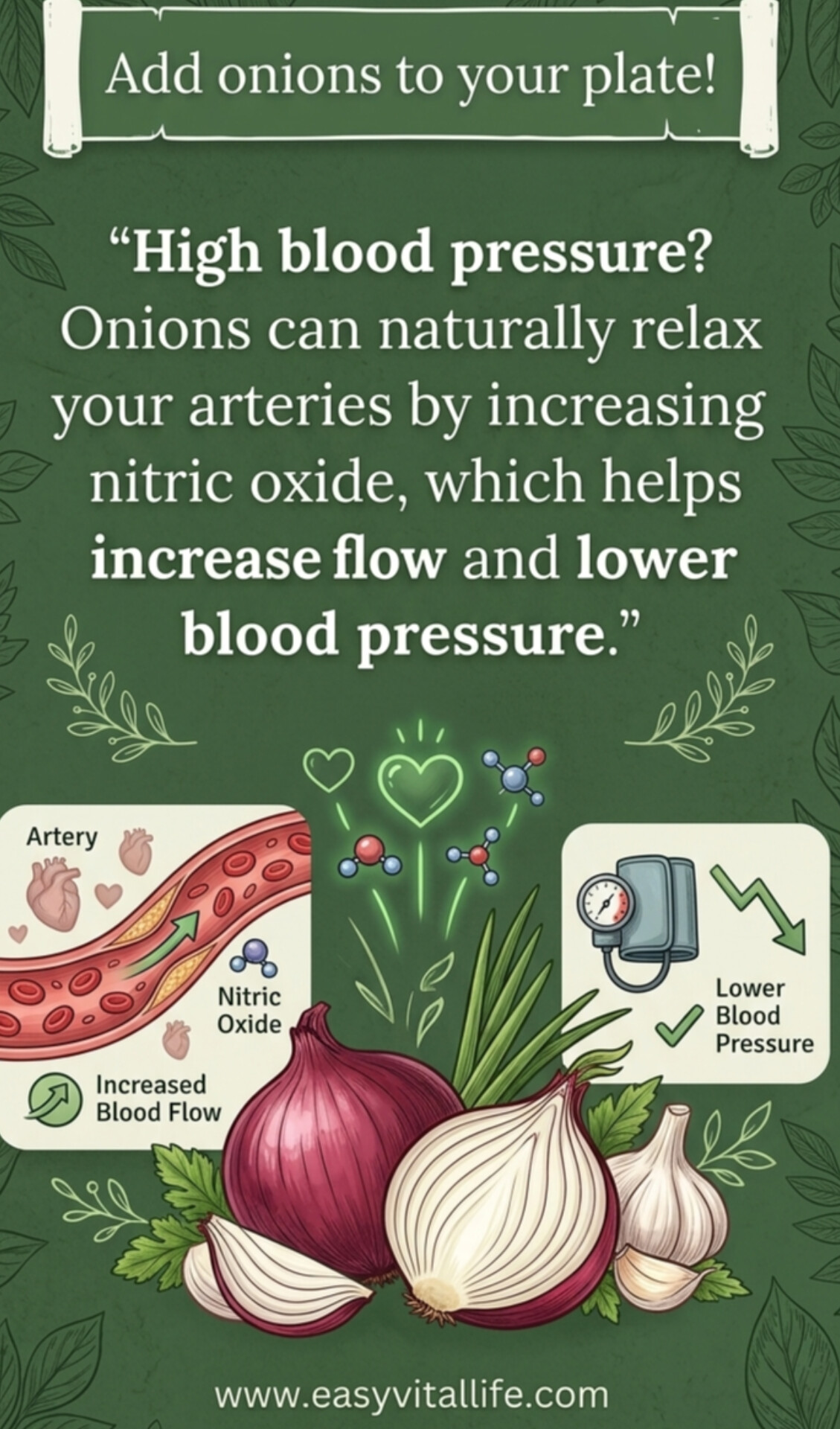
Here’s why: Onions contain specific compounds that help your body produce more nitric oxide. Nitric oxide is a gas your blood vessels make to tell arteries to relax and widen. When arteries relax, blood flows easier and pressure drops. It’s the same pathway targeted by some blood pressure medications, except onions support it through food.
This isn’t magic. It’s chemistry. And it’s backed by decades of research.
How Onions Help Lower Blood Pressure: The Nitric Oxide Connection
Your arteries are not stiff pipes. They’re dynamic and lined with a thin layer called the endothelium. When the endothelium is healthy, it releases nitric oxide. Think of nitric oxide as a text message to your blood vessels that says “chill out and open up.”
Here’s how onions support that process:
1. Quercetin: The main player
Quercetin is a flavonoid antioxidant found in high amounts in onions, especially red and yellow varieties. Studies show quercetin improves endothelial function and helps increase nitric oxide bioavailability. A meta-analysis in the Journal of the American Heart Association found quercetin supplementation significantly reduced blood pressure in people with hypertension. Onions are one of the richest dietary sources.
2. Sulfur compounds: The garlic cousins
Like garlic, onions contain organosulfur compounds such as allicin and S-allyl cysteine. These compounds promote nitric oxide production and have a mild vasodilatory effect, meaning they help blood vessels expand.
3. Potassium boost
One medium onion gives you about 190mg of potassium. Potassium helps your kidneys flush out excess sodium, which is a major driver of high blood pressure. Most people eat too much sodium and not enough potassium. Onions help balance that ratio.
4. Anti-inflammatory action
Chronic inflammation damages the endothelium and makes it harder to produce nitric oxide. The antioxidants in onions reduce oxidative stress and inflammation, keeping your arteries more flexible over time.
The result: More relaxed arteries, better blood flow, and less force needed for your heart to pump. That’s lower blood pressure.
What Kind of Onion Is Best for Blood Pressure?
All onions help, but some have more firepower:
Red onions: Highest in quercetin and anthocyanins. The red pigment is an antioxidant. These are your best bet for blood pressure support.
Yellow onions: Highest total flavonoid content. Great for cooking and still very high in quercetin.
White onions: Lower in antioxidants than red or yellow, but still provide sulfur compounds and potassium.
Spring onions and shallots: Very concentrated. Shallots have up to 10x the antioxidant content of some white onions.
Pro tip: The outer layers have the most quercetin. Peel as little as possible. And don’t overcook them. Quercetin is heat-stable, but water-soluble compounds leak out if you boil them too long. Light sautéing, roasting, or eating raw gives you the most benefit.
How Much Onion Do You Need Per Day?
Research on quercetin used doses from 500mg to 1000mg per day. One medium red onion has about 50mg of quercetin.
That means you don’t need a crazy amount. Half to one medium onion per day is a solid target. That’s one onion in your salad, omelet, soup, or stir-fry.
Consistency beats quantity. Eating half an onion daily for 30 days will do more than eating 3 onions once a week.
7 Easy Ways to Add More Onion to Your Diet
1. The morning savory oats
Sauté half a red onion and add it to oats with an egg, avocado, and chili flakes. Potassium, healthy fats, and nitric oxide support in one bowl.
2. Quick-pickled red onions
Slice red onions, cover with apple cider vinegar, water, and a pinch of salt. Keep in the fridge. Add to everything: sandwiches, tacos, rice bowls, salads. The vinegar adds extra blood pressure benefits.
3. French onion soup shortcut
Slow-cook 3 yellow onions until caramelized. Add broth, herbs, and a slice of toasted whole grain bread. Freeze in portions.
4. Raw in salads and salsas
Dice red onion fine and soak in cold water for 5 minutes to take the bite off. Then add to tomato, cucumber, and parsley salad with olive oil and lemon.
5. Onion and garlic base
Every soup, stew, or sauce should start with onion and garlic. You’re building flavor and artery support at the same time.
6. Grilled onion steaks
Cut thick onion rounds, brush with olive oil, and grill. They go sweet and caramelized. Serve with meat or fish.
7. Add to smoothies
Sounds weird, but a small chunk of sweet onion in a green smoothie with apple, spinach, and lemon is undetectable and adds prebiotic fiber.
Realistic Expectations: What Onions Can and Can’t Do
Onions can:
Support healthy endothelial function, provide potassium, reduce oxidative stress, and contribute to a 3 to 6 mmHg drop in systolic blood pressure over weeks when eaten daily. That’s meaningful. A 5 mmHg drop lowers stroke risk by 14 percent.
Onions can’t:
Replace blood pressure medication if your doctor prescribed it. They won’t fix a 180/110 reading overnight. They are not a substitute for reducing salt, losing weight, exercising, or managing stress.
Think of onions as part of your team. They work with your other healthy habits. If you’re on medication, adding onions may help your numbers improve so your doctor can adjust your dose later. Never stop meds without medical supervision.
Safety and Side Effects
Onions are safe for most people, but keep these in mind:
1. Blood thinners: Onions have mild anti-clotting effects. If you take warfarin or other blood thinners, keep your onion intake consistent day to day and tell your doctor. Don’t go from zero to 2 onions overnight.
2. IBS and FODMAPs: Onions are high in FODMAPs and can cause gas or bloating for people with IBS. If that’s you, use the green tops of spring onions or try infused onion oil instead.
3. Acid reflux: Raw onions can trigger heartburn in some people. Cook them if that happens.
4. Bad breath: Obvious one. Parsley, green tea, or apple can neutralize it.
Onions Plus These Habits Equal Better Results
Onions work best when you also:
Reduce sodium: Aim for under 2300mg per day, or 1500mg if you have hypertension.
Walk daily: 30 minutes of walking boosts nitric oxide on its own.
Lose 5 to 10 pounds if overweight: Every 1kg lost drops blood pressure about 1 mmHg.
Manage stress: Chronic stress constricts blood vessels. Breathing exercises, prayer, or 10 minutes of quiet help.
Limit alcohol: More than 1 drink per day for women or 2 for men raises blood pressure.
Final Thoughts: The Simplest Heart Habit
Most supplements for blood pressure cost 30 dollars a month. Onions cost 50 cents.
You don’t need a perfect diet to see benefits. You just need to make onions a habit. Buy a bag this week. Keep them on your counter where you see them. Chop one while dinner is cooking and throw it in.
Your arteries don’t care if the onion is fancy. They just need the quercetin and sulfur compounds every day.
Add onions to your plate. Your heart and your blood pressure will notice.
Important disclaimer: This article is for educational purposes only and is not medical advice. High blood pressure is a serious condition. Talk to your doctor before making dietary changes, especially if you take medication.