
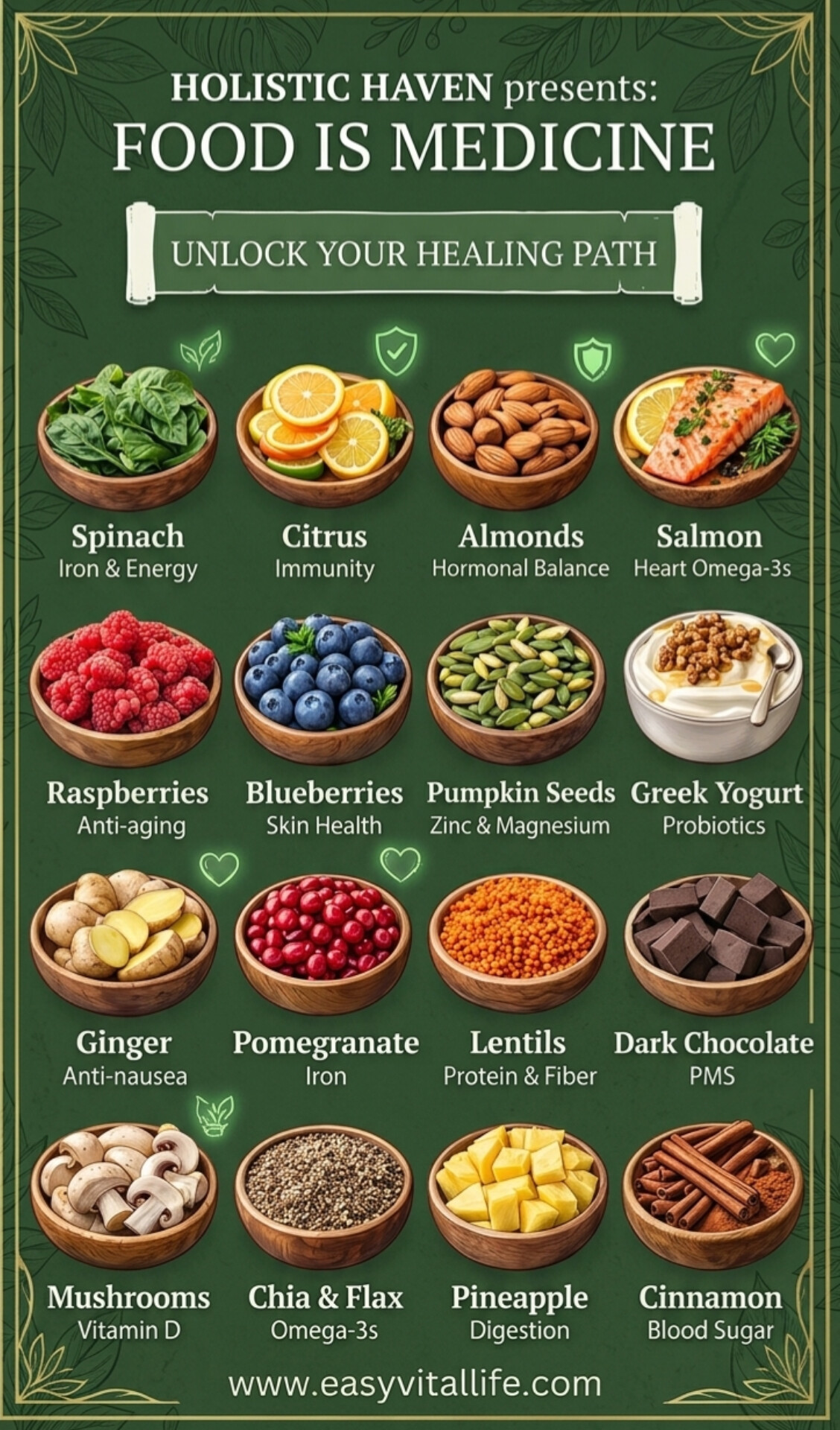
Discover 16 everyday foods that act like medicine for your body. Learn how spinach, salmon, ginger, dark chocolate, and more support immunity, hormones, digestion, mood, and heart health naturally….
Food is Medicine: 16 Everyday Foods That Heal, Protect, and Energize Your Body
Let’s start with the truth your grandmother knew
Before pharmacies, there was the kitchen. For thousands of years, humans used food to prevent illness, boost energy, balance mood, and recover faster. Modern science is finally catching up and proving what traditional cultures practiced daily.
The image says it perfectly: Food is Medicine.
But not in a restrictive, boring way. These 16 foods are delicious, affordable, and easy to add to meals you already eat. Each one targets a specific system in your body, from your blood to your brain to your gut.
This isn’t about a perfect diet. It’s about adding powerful ingredients so your body has the tools to heal and thrive.
The 16 Foods and Why Your Body Loves Them
1. Spinach: Iron & Energy
If you feel tired all the time, start here. Spinach is loaded with non-heme iron, folate, and magnesium. Iron builds red blood cells that carry oxygen. No iron equals no energy. The vitamin C in spinach also helps you absorb the iron better. Add a handful to eggs, smoothies, or pasta. Light steaming increases iron availability.
2. Citrus: Immunity
Oranges, lemons, limes, and grapefruit are vitamin C powerhouses. Vitamin C boosts white blood cell production, shortens colds, and acts as a key antioxidant. The flavonoids in the white pith also support blood vessels and reduce inflammation. Start your morning with warm lemon water or snack on orange slices.
3. Almonds: Hormonal Balance
Almonds are rich in vitamin E, magnesium, and healthy monounsaturated fats. All three are critical for hormone production and balance. Vitamin E protects reproductive cells from oxidative stress. Magnesium helps regulate cortisol, your stress hormone. A small handful daily supports PMS symptoms, mood swings, and overall endocrine health.
4. Salmon: Heart Omega-3s
Wild salmon is one of the best sources of EPA and DHA, the two omega-3 fats your heart and brain need. They lower triglycerides, reduce blood pressure, decrease inflammation, and keep your heart rhythm stable. The American Heart Association recommends 2 servings of fatty fish per week. Bake, grill, or air-fry it with lemon.
5. Raspberries: Anti-aging
These berries have one of the highest fiber contents of any fruit, plus ellagic acid and anthocyanins. Fiber feeds your gut bacteria, which control inflammation throughout your body. The antioxidants protect collagen and skin cells from damage. Anti-aging starts in your gut, and raspberries support both.
6. Blueberries: Skin Health
Blueberries are famous for anthocyanins, the compounds that give them deep color. Studies link daily blueberries to improved skin elasticity, hydration, and UV protection. They also support brain health and memory. One cup of frozen blueberries in a smoothie is an easy daily habit.
7. Pumpkin Seeds: Zinc & Magnesium
Also called pepitas, these are a mineral powerhouse. Zinc supports immune function, wound healing, and testosterone production. Magnesium supports over 300 enzyme reactions including sleep, muscle relaxation, and blood sugar control. Most people are low in both. One handful at night helps you sleep deeper and reduces cramps.
8. Greek Yogurt: Probiotics
Real Greek yogurt contains live cultures like Lactobacillus and Bifidobacterium. These probiotics repopulate your gut with good bacteria, which improves digestion, boosts immunity, and even affects mood through the gut-brain axis. Look for “live and active cultures” on the label. Add berries, honey, and walnuts for a complete snack.
9. Ginger: Anti-nausea
Gingerol, the active compound in ginger, is clinically proven to reduce nausea from pregnancy, motion sickness, and chemo. It also reduces muscle pain, lowers blood sugar, and fights inflammation. Grate fresh ginger into tea, stir-fry, or soup. Even 1 gram per day makes a difference.
10. Pomegranate: Iron
Pomegranate seeds and juice are rich in iron, vitamin C, and nitrates. The vitamin C helps you absorb the iron, making it great for anemia and low energy. The nitrates convert to nitric oxide, which relaxes blood vessels and improves circulation. Drink 4oz of pure pomegranate juice or sprinkle seeds on salads.
11. Lentils: Protein & Fiber
One cup of cooked lentils gives you 18g of plant protein and 16g of fiber. That combo stabilizes blood sugar, keeps you full for hours, and feeds good gut bacteria. They’re also packed with folate, iron, and potassium for heart and blood health. Lentils are cheap, fast, and meatless protein that supports hormones and digestion.
12. Dark Chocolate: PMS
70 percent dark chocolate or higher is rich in magnesium, iron, and flavonoids. Magnesium reduces cramps and mood swings. Flavonoids improve blood flow and brain function. The small caffeine plus theobromine combo gives calm energy. Two squares per day can ease PMS symptoms without the sugar crash of milk chocolate.
13. Mushrooms: Vitamin D
Mushrooms are the only plant source that can make vitamin D when exposed to UV light. Vitamin D supports immunity, bone health, and mood. Most people are deficient, especially in winter. Buy mushrooms and sit them in sunlight for 30 minutes before cooking to boost D levels. Shiitake, maitake, and portobello are best.
14. Chia & Flax: Omega-3s
If you don’t eat fish, these seeds are your plant-based omega-3 source. They provide ALA, which your body partially converts to EPA and DHA. They also give 10g of fiber per ounce, which supports digestion and cholesterol control. The gel they form when soaked soothes the gut lining. Add to oats, yogurt, or smoothies.
15. Pineapple: Digestion
Pineapple contains bromelain, a group of enzymes that break down protein and reduce gut inflammation. That’s why it’s used as a meat tenderizer. Eating fresh pineapple after a heavy meal helps digestion and reduces bloating. The vitamin C and manganese also support immunity and bone health.
16. Cinnamon: Blood Sugar
Cinnamon improves insulin sensitivity and slows the breakdown of carbs in your gut. Studies show 1 to 6 grams daily can lower fasting blood sugar by 10 to 29 percent in people with type 2 diabetes. It also has antimicrobial properties. Use Ceylon cinnamon, not Cassia, for daily use. Add to coffee, oats, or sweet potatoes.
How to Use Food as Medicine: 5 Rules That Actually Work
1. Add, don’t restrict
You don’t need to quit everything. Start by adding 3 of these foods to your week. Crowd out the bad stuff with good stuff. Your cravings will shift naturally when your body gets nutrients.
2. Consistency over intensity
Eating salmon once won’t fix your heart. Eating it weekly for 3 months will. Same with blueberries, spinach, and pumpkin seeds. Small daily doses beat big occasional doses.
3. Pair foods for better absorption
Iron plus vitamin C equals better absorption. So eat spinach with citrus or pomegranate. Fat plus vitamin D equals better absorption. So cook mushrooms in olive oil. Turmeric plus black pepper equals 2000 percent better absorption. Learn the combos.
4. Food first, supplements second
These foods give you fiber, water, antioxidants, and phytonutrients that pills can’t replicate. Use supplements only to fill gaps, not as the foundation.
5. Listen to your body
If ginger gives you heartburn or raspberries cause bloating, adjust. Food is medicine, but it’s personal. Use this list as a menu, not a prescription. Pick what works for you.
Build Your “Medicine Cabinet” Meal Plan
Breakfast: Greek yogurt with blueberries, raspberries, chia seeds, and cinnamon.
Lunch: Lentil soup with spinach, carrots, and ginger. Side of orange slices.
Snack: Handful of almonds and pumpkin seeds plus 2 squares dark chocolate.
Dinner: Baked salmon with roasted mushrooms and steamed broccoli. Pineapple for dessert.
Tea: Fresh ginger and lemon.
That’s 12 of the 16 foods in one day without trying hard.
Final Thoughts: Your Plate is Your Pharmacy
You don’t have to choose between food that tastes good and food that heals you. These 16 foods prove you can have both.
Chronic disease doesn’t happen overnight. It happens from thousands of small choices. Healing works the same way. Thousands of small, good choices.
Start with one food this week. Notice your energy, your digestion, your sleep, your skin. Your body will tell you what’s working.
Food is medicine. And the pharmacy is open every time you eat.
Medical disclaimer: This article is for educational purposes only and is not medical advice. Always talk to your doctor before making dietary changes, especially if you have a medical condition or take medication.
For more natural health guides, visit www.easyvitallife.com