
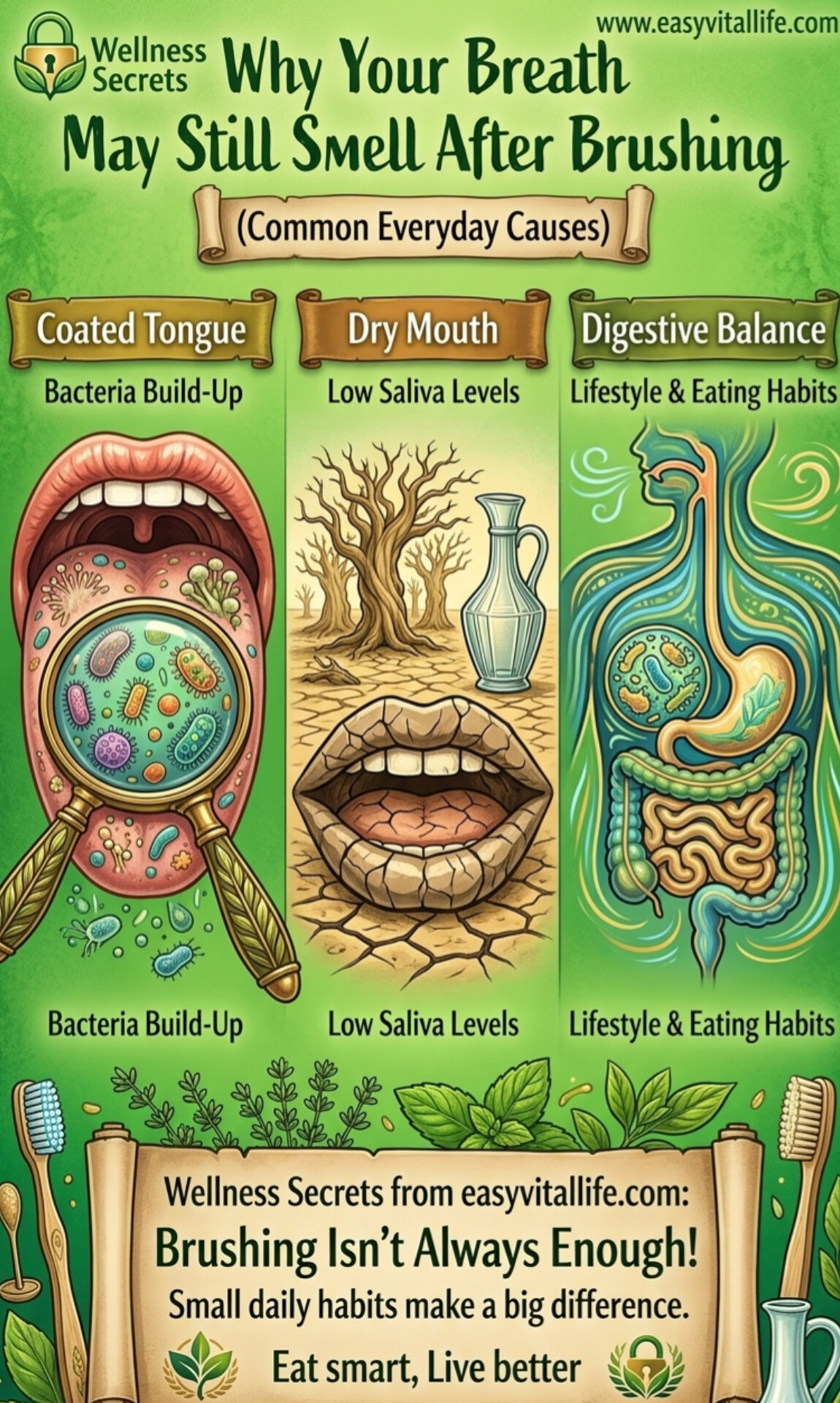
You brush your teeth twice a day, use minty toothpaste, and still notice an unpleasant odor a few hours later. If this sounds familiar, you are far from alone and the problem almost certainly goes beyond your toothbrush…
Bad breath, clinically known as halitosis, affects a large portion of the population at some point in their lives. The frustrating reality is that brushing your teeth, while essential, only addresses one piece of a much larger puzzle. The mouth, the digestive system, and your daily lifestyle habits are all tightly connected and when one is out of balance, your breath pays the price.
Understanding the true root causes of persistent bad breath is the first step toward genuinely solving it. This guide breaks down the three most common everyday culprits and gives you clear, actionable ways to tackle each one.
The Three Core Causes of Bad Breath After Brushing
Most cases of lingering halitosis can be traced back to three interrelated sources: bacterial overgrowth on the tongue, insufficient saliva production, and imbalances in the digestive system. Let’s explore each in depth.
Cause 01: Coated Tongue & Bacterial Build-Up
The surface of your tongue is one of the most bacteria-rich environments in the entire body. Unlike the smooth surface of your teeth, the tongue’s texture — with its tiny papillae and natural crevices — creates an ideal habitat for hundreds of species of microorganisms to thrive, feed, and multiply.
When these bacteria break down food particles, dead cells, and proteins left in the mouth, they release volatile sulfur compounds (VSCs) the chemical substances directly responsible for that characteristic unpleasant odor. A visibly white or yellowish coating on the tongue is a clear sign that bacterial load is high.
Brushing your teeth does almost nothing to clean the back and middle of the tongue, which is where the majority of odor-producing bacteria reside. This is precisely why many people who brush diligently still struggle with persistent bad breath.
🔸Use a dedicated tongue scraper every morning before eating or drinking
🔸Brush the tongue gently with your toothbrush as part of your daily routine
🔸Rinse with an antibacterial, alcohol-free mouthwash targeting sulfur compounds
🔸Stay consistent, tongue bacteria rebuild within hours, so daily care is essential
Cause 02: Dry Mouth & Low Saliva Levels
Saliva is one of the body’s most underrated natural defenses. It constantly washes away food debris, neutralizes acids, and contains enzymes and antibacterial proteins that actively control the bacterial population in your mouth. When saliva production drops, bacteria multiply faster, odors concentrate, and bad breath intensifies significantly.
Dry mouth — medically known as xerostomia — can be triggered by a surprisingly wide range of everyday factors. Mouth breathing during sleep, caffeine and alcohol consumption, certain prescription medications (including antihistamines, antidepressants, and blood pressure drugs), dehydration, and even chronic stress can all significantly reduce saliva flow.
Morning breath is the classic example of dry-mouth-driven halitosis: after hours of sleep with minimal saliva production, bacteria have had free rein to multiply unchecked resulting in that familiar stale odor when you first wake up.
🔸Drink at least 8 glasses of water throughout the day to maintain adequate hydration
🔸Chew sugar-free gum containing xylitol to actively stimulate saliva production
🔸Reduce or avoid alcohol and excess caffeine, especially in the evening
🔸If dry mouth persists, speak with your doctor it may be medication-related
🔸Consider a humidifier in your bedroom to reduce overnight mouth breathing
“Brushing isn’t always enough. Small daily habits consistently applied make a far bigger difference than any single product.”
Cause 03: Digestive Balance & Lifestyle Habits
Many people are surprised to learn that bad breath can originate not in the mouth at all, but deep within the digestive system. The gut and the oral cavity are directly connected through the esophagus, and when digestion is sluggish, imbalanced, or disrupted, odorous gases can travel upward and escape through the breath.
Acid reflux and gastroesophageal reflux disease (GERD) are particularly common contributors stomach acids and partially digested food repeatedly make their way toward the throat, creating a chronically acidic and malodorous environment in the back of the mouth. Similarly, poor gut microbiome diversity, constipation, and excessive fermentation in the intestines can all produce gases that eventually reach the breath.
Beyond digestion itself, what you eat plays a direct and often immediate role. Garlic and onions contain sulfur compounds that are absorbed into the bloodstream and exhaled through the lungs for hours after eating. High-protein and low-carbohydrate diets can trigger a metabolic state called ketosis, which produces a distinctly sharp, sweet-sour breath odor. Sugary foods fuel the very bacteria that generate bad-smelling compounds in the mouth.
🔸Eat fiber-rich foods vegetables, legumes, and whole grains to support healthy digestion
🔸Add probiotic-rich foods like yogurt, kefir, and fermented vegetables to your diet
🔸Avoid eating large meals close to bedtime, which increases acid reflux risk
🔸Limit processed sugars that fuel harmful oral bacteria
🔸If GERD is suspected, consult a healthcare professional for proper diagnosis and treatment
Building a Complete Daily Breath-Care Routine
Addressing bad breath effectively means treating it as a whole-body issue rather than a purely dental one. The most successful approach combines consistent oral hygiene with smart hydration habits and diet adjustments that support both oral and digestive health.
A truly effective morning routine starts before breakfast: scrape the tongue, brush teeth and gums for a full two minutes, floss to remove interdental bacteria and food debris, and rinse with an alcohol-free mouthwash. Throughout the day, staying well hydrated is the single simplest action with the greatest impact on saliva production and bacterial control.
Pro tip: Green tea is a particularly powerful ally against bad breath. It contains natural polyphenols called catechins that have been shown in research to suppress the growth of odor-producing bacteria and reduce the production of volatile sulfur compounds significantly.
At night, the bedtime routine matters just as much as the morning one. Brush and floss thoroughly to remove the day’s accumulated bacteria and food particles before they have eight or more hours of overnight rest to thrive and multiply. If you snore or tend to breathe through your mouth while sleeping, addressing this issue whether through positional changes, nasal strips, or a consultation with a sleep specialist can dramatically improve morning breath.
When to See a Professional
While the vast majority of halitosis cases respond well to lifestyle and hygiene improvements, there are situations where persistent bad breath signals an underlying medical condition that requires professional evaluation. Chronic sinusitis, tonsil stones (tonsilloliths), kidney disease, liver problems, and uncontrolled diabetes can all manifest as specific types of breath odor that won’t resolve with oral hygiene alone.
If your bad breath persists despite a thorough and consistent oral care routine, changes to diet and hydration, and attention to digestive health, it is worth scheduling a visit with your dentist first — and then your primary care physician if no oral cause is found. There are also specialized halitosis clinics and breath analysis tests (including organoleptic assessment and gas chromatography) that can pinpoint the exact chemical compounds causing the issue.
The Bottom Line: Brushing Is a Start, Not a Solution
Persistent bad breath after brushing is almost never about a lack of effort it is about targeting the right causes with the right approach. Bacteria living deep on the tongue, insufficient saliva to flush and neutralize the oral environment, and digestive imbalances driven by lifestyle and eating habits are the three main forces working against fresh breath every single day.
The encouraging truth is that all three are highly responsive to simple, sustainable daily habits. Scrape your tongue, stay genuinely hydrated, eat in ways that support your gut, and treat your oral care as a whole-body practice. Small consistent actions, done daily, will always outperform any single product or shortcut.
Eat smart. Live better. And breathe with confidence.