
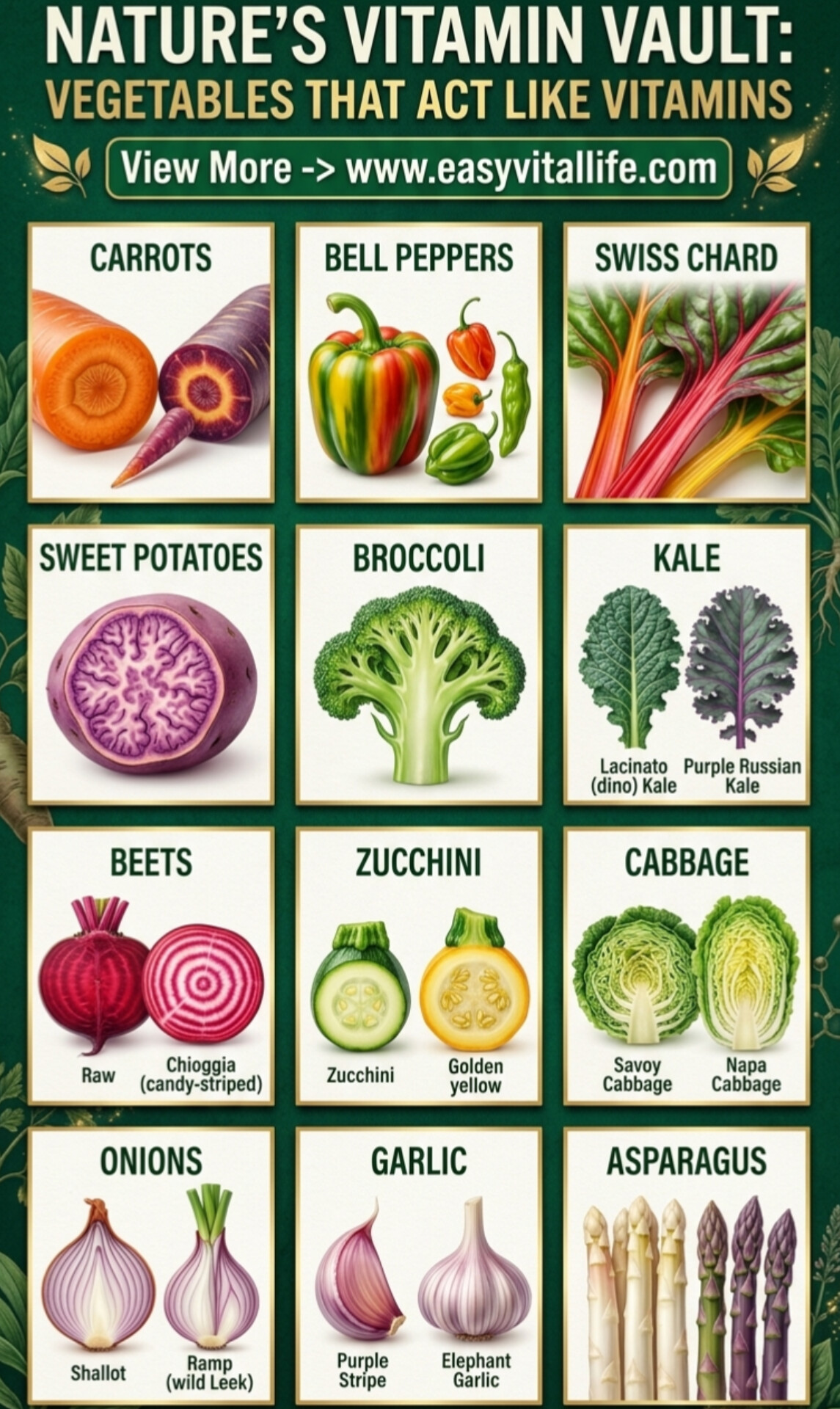
Nature’s Vitamin Vault: Vegetables That Act Like Vitamins for Ultimate Health
Your body needs vitamins every day to function at its best. While supplements are popular, the most powerful vitamins come directly from nature. Certain vegetables act like vitamins because they are packed with nutrients that support immunity, energy, skin, eyes, and long term wellness….
This is nature’s vitamin vault. These 12 nutrient dense vegetables deliver vitamin A, vitamin C, vitamin K, antioxidants, and minerals in every bite. Add them to your meals daily and fuel your body the way nature intended.
Carrots for Eye Health and Vitamin A Power
Carrots are famous for eye health, and for good reason. They are one of the richest sources of beta carotene, which your body converts into vitamin A. Vitamin A supports vision, immune function, and skin repair. Eating carrots raw, roasted, or juiced helps protect your eyes from strain and keeps your skin glowing. Purple carrots add extra antioxidants called anthocyanins that fight inflammation and support heart health.
Bell Peppers Loaded with Vitamin C and Antioxidants
Bell peppers contain more vitamin C than an orange. One cup of red bell peppers delivers over 150 percent of your daily vitamin C needs. This vitamin boosts collagen, speeds wound healing, and strengthens immunity. Bell peppers also provide vitamin B6, vitamin E, and carotenoids like lutein and zeaxanthin that protect your eyes. Eat them raw in salads or lightly sautéed to keep the nutrients intact.
Swiss Chard for Vitamin K and Blood Health
Swiss chard is a leafy green powerhouse. It is loaded with vitamin K, which is essential for blood clotting and bone strength. Swiss chard also delivers magnesium, potassium, and iron to support energy and muscle function. The colorful stems contain betalains, plant compounds that reduce oxidative stress. Add swiss chard to smoothies, soups, or stir fries for a natural vitamin boost.
Sweet Potatoes Provide Beta Carotene and Fiber
Sweet potatoes are nature’s vitamin A capsule. One medium sweet potato gives you over 400 percent of your daily vitamin A requirement. This supports vision, immune defense, and healthy skin. Sweet potatoes also provide vitamin C, manganese, and fiber that improve digestion and blood sugar balance. Purple sweet potatoes contain anthocyanins for brain and heart protection. Bake them whole or mash them for a nutrient rich side dish.
Broccoli Delivers Vitamin C, K, and Detox Support
Broccoli is a cruciferous vegetable that acts like a multivitamin. It provides high levels of vitamin C, vitamin K, folate, and fiber. Broccoli also contains sulforaphane, a compound that activates detox enzymes in the liver. This helps your body remove toxins and supports cellular health. Steam broccoli lightly to preserve its vitamin content and cancer fighting compounds.
Kale Is the Ultimate Leafy Green Vitamin Source
Kale is one of the most nutrient dense vegetables on earth. It offers vitamin A, vitamin C, and more vitamin K per cup than almost any other food. Kale also provides calcium, potassium, and antioxidants like quercetin that reduce inflammation. Lacinato kale and purple Russian kale are rich in lutein for eye protection. Add kale to salads, smoothies, or chips for a daily vitamin upgrade.
Beets Support Blood Flow and Liver Health
Beets are rich in folate, manganese, and nitrates that improve blood flow and lower blood pressure. Folate is a B vitamin essential for cell growth and DNA repair. Beets also support liver detox and athletic performance. Chioggia beets add betalain antioxidants that fight oxidative stress. Roast beets, blend them into smoothies, or juice them for a natural energy boost.
Zucchini Hydrates and Delivers Vitamin C
Zucchini is over 90 percent water, making it perfect for hydration and digestion. It provides vitamin C, vitamin B6, and potassium. Zucchini is also low in calories and high in fiber, supporting weight balance and gut health. Golden yellow zucchini adds extra carotenoids for skin and eye support. Spiralize it into noodles or grill it for a light nutrient rich meal.
Cabbage for Vitamin C and Gut Healing
Cabbage is a cruciferous vegetable rich in vitamin C, vitamin K, and fiber. It also contains glucosinolates that support detox and reduce inflammation. Savoy and Napa cabbage are excellent for gut health because they feed good bacteria and soothe digestion. Ferment cabbage into sauerkraut to multiply the probiotic benefits. Raw cabbage in slaws keeps vitamin C levels high.
Onions Provide Quercetin and Immune Support
Onions are more than flavor. They are loaded with quercetin, a powerful antioxidant that supports immunity and reduces allergy symptoms. Onions also provide vitamin C, B vitamins, and prebiotic fiber that feeds healthy gut bacteria. Shallots and wild leeks offer stronger compounds for heart health. Eat onions raw or cooked to get both vitamin and medicinal benefits.
Garlic Acts Like a Natural Antibiotic Vitamin
Garlic is one of the oldest medicinal vegetables. It contains allicin, a sulfur compound with antibacterial and antiviral properties. Garlic also provides manganese, vitamin B6, and vitamin C. It supports heart health by lowering blood pressure and cholesterol. Purple stripe garlic and elephant garlic are milder yet still potent. Use fresh crushed garlic daily for immune and cardiovascular support.
Asparagus for Folate and Natural Detox
Asparagus is a spring vegetable rich in folate, vitamin K, and vitamin E. Folate supports brain health, mood, and pregnancy wellness. Asparagus also acts as a natural diuretic that helps flush excess water and toxins. It contains inulin, a prebiotic fiber that feeds gut bacteria. White, green, and purple asparagus all provide unique antioxidants. Grill or steam asparagus for a simple vitamin rich side.
Build Your Plate from Nature’s Vitamin Vault
These 12 vegetables that act like vitamins give your body real nutrition without synthetic supplements. Eating a variety of colors ensures you get vitamin A, vitamin C, vitamin K, folate, potassium, and protective antioxidants every day. Focus on fresh, organic, and seasonal produce when possible. Light cooking, steaming, or eating raw helps preserve vitamin content. Start adding carrots, bell peppers, kale, and garlic to your meals today. Your energy, immunity, and long term health will thank you.