
Natural Ways to Lower Your Blood Pressure Without Medication
High blood pressure clinically known as hypertension is one of the most prevalent and dangerous chronic health conditions in the world today. Often called the silent killer, it frequently produces no obvious symptoms while quietly damaging blood vessels, straining the heart, and dramatically increasing the risk of heart attack, stroke, kidney disease, and vision loss… The World Health Organization estimates that hypertension affects over 1.28 billion adults globally, yet a staggering proportion of those individuals remain either undiagnosed or inadequately treated.
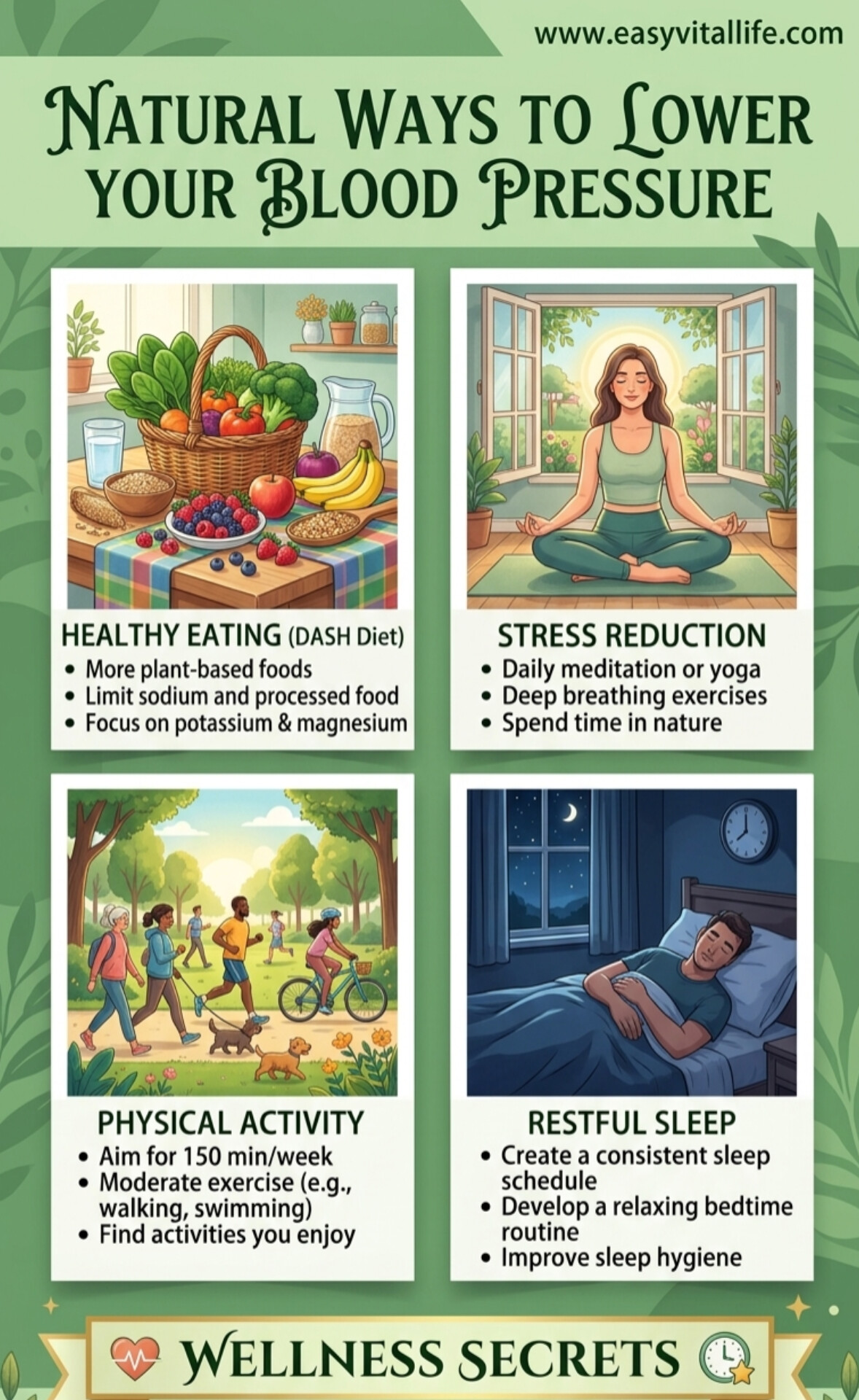
What makes hypertension particularly significant is that in the vast majority of cases, it is both preventable and reversible through lifestyle intervention alone. Medication has its place and for many people it is essential but research consistently shows that four core natural strategies can lower blood pressure as effectively as some pharmaceutical treatments when applied consistently and seriously. These four pillars are healthy eating, stress reduction, physical activity, and restful sleep. Understanding exactly how each one works gives you the power to take genuine control of your cardiovascular health.
Healthy Eating — The DASH Diet Approach
Of all the dietary strategies studied for blood pressure management, the DASH diet Dietary Approaches to Stop Hypertension has the most robust and consistent scientific support. Developed specifically to address hypertension through nutrition, the DASH diet has been shown in clinical trials to reduce systolic blood pressure by 8 to 14 mmHg in as little as two weeks a reduction comparable to that achieved by first-line blood pressure medications in many patients.
The foundation of the DASH approach is straightforward: prioritize plant-based whole foods, sharply limit sodium and processed food consumption, and focus specifically on potassium and magnesium intake. These two minerals work in direct opposition to sodium in the body. Potassium relaxes the walls of blood vessels and helps the kidneys excrete excess sodium through urine, directly reducing vascular pressure.
Magnesium supports healthy vasodilation the widening of blood vessels and plays a regulatory role in the balance of other minerals involved in blood pressure control.
The richest dietary sources of potassium include bananas, sweet potatoes, avocados, leafy greens, beans, and lentils. Magnesium is abundant in dark leafy vegetables, nuts, seeds, whole grains, and dark chocolate. Sodium reduction is equally critical even a modest reduction from the average Western intake can produce measurable drops in blood pressure within days. Eliminating or dramatically reducing processed meats, canned soups, fast food, salty snacks, and packaged sauces removes the primary source of excess sodium in most modern diets.
Increasing plant-based foods simultaneously delivers fiber, antioxidants, and nitrates — compounds found in vegetables like beetroot and spinach that the body converts to nitric oxide, a molecule that directly relaxes and dilates blood vessel walls. Eating more plants is not a passive dietary choice when it comes to blood pressure it is an active, targeted cardiovascular intervention.
Stress Reduction — Meditation, Yoga, and Time in Nature
The relationship between chronic psychological stress and elevated blood pressure is direct, well-established, and profoundly underestimated by most people managing hypertension. When the body perceives stress, it activates the sympathetic nervous system triggering the release of adrenaline and cortisol, accelerating heart rate, constricting blood vessels, and causing an immediate spike in blood pressure. In short bursts, this stress response is normal and harmless. When it becomes chronic sustained day after day by work pressure, financial anxiety, relationship conflict, or unresolved emotional stress the consequences for cardiovascular health are severe.
Daily meditation is one of the most well-researched non-pharmacological interventions for blood pressure reduction. Regular mindfulness meditation practice has been shown to lower systolic blood pressure by 4 to 7 mmHg on average a clinically meaningful reduction through its direct effect on the autonomic nervous system, shifting the body from sympathetic dominance toward parasympathetic calm.
Even ten to fifteen minutes of focused meditation per day produces measurable physiological changes over weeks of consistent practice.
Yoga combines the benefits of meditation with gentle physical movement and deep breathing a particularly powerful combination for blood pressure management. Deep breathing exercises specifically activate the vagus nerve, stimulating the parasympathetic response that slows heart rate, reduces vascular resistance, and lowers blood pressure in real time. Techniques such as box breathing, diaphragmatic breathing, and alternate nostril breathing can be practiced anywhere and produce immediate calming effects on the cardiovascular system.
Spending time in natural environments parks, forests, gardens, or near water has been shown in multiple studies to reduce cortisol levels, lower heart rate, and meaningfully decrease blood pressure compared to equivalent time spent in urban environments. The Japanese practice of shinrin-yoku, or forest bathing, has produced particularly compelling research results, with even short exposures to natural settings producing lasting reductions in stress hormone levels and blood pressure readings.
Physical Activity — 150 Minutes Per Week for a Healthier Heart
Regular physical activity is one of the most powerful natural tools available for both preventing and treating high blood pressure. The heart is a muscle, and like all muscles, it becomes stronger and more efficient with consistent exercise. A stronger heart pumps blood more effectively with each beat, requiring less force and therefore generating less pressure to circulate blood throughout the body. Over time, regular exercise also promotes the development of new blood vessels, improves arterial flexibility, reduces inflammatory markers in the bloodstream, and supports healthy weight management, all of which contribute directly to lower blood pressure.
The current evidence-based recommendation for cardiovascular health is a minimum of 150 minutes of moderate-intensity aerobic exercise per week the equivalent of approximately 30 minutes on five days. Moderate intensity means activities that raise the heart rate and produce noticeable breathing effort without making conversation impossible. Walking briskly, swimming, cycling, dancing, gardening, and light jogging all qualify and have all been individually shown to produce significant reductions in blood pressure with consistent practice.
The most important factor is not the specific activity chosen but the consistency with which it is practiced. Finding activities that are genuinely enjoyable dramatically increases the likelihood of maintaining a regular exercise habit long-term. A thirty-minute evening walk with a friend, a weekend swim, or a daily cycling commute can all deliver the cardiovascular benefits of a structured gym program while being far more sustainable for most people over months and years.
Research shows that individuals who engage in regular moderate exercise can reduce their systolic blood pressure by 5 to 8 mmHg a reduction sufficient to move many people out of the hypertensive range entirely without any pharmacological intervention.
Restful Sleep — The Most Overlooked Blood Pressure Strategy
Sleep is perhaps the most underappreciated pillar of blood pressure management, and the evidence connecting poor sleep to hypertension is both overwhelming and deeply underrecognized. During healthy sleep, blood pressure naturally drops by 10 to 20 percent in a phenomenon known as nocturnal dipping. This nightly reduction gives the heart and blood vessels a critical period of reduced workload and recovery. When sleep is consistently poor in quality or insufficient in duration, this nocturnal dip does not occur — leaving the cardiovascular system under continuous pressure with no restorative break.
Chronic sleep deprivation defined as regularly getting less than seven hours per night is independently associated with a significantly elevated risk of developing hypertension, regardless of other lifestyle factors.
Poor sleep activates the sympathetic nervous system, elevates cortisol and adrenaline levels, promotes inflammation, and disrupts the regulation of hormones that control blood vessel tone and fluid balance. Sleep apnea a condition characterized by repeated breathing interruptions during sleep is one of the most powerful secondary causes of treatment-resistant hypertension and is dramatically underdiagnosed.
Creating a consistent sleep schedule going to bed and waking at the same time every day, including weekends is the single most effective behavioral intervention for improving sleep quality. The body’s circadian rhythm responds powerfully to regularity, and a consistent schedule anchors the sleep-wake cycle in ways that produce deeper, more restorative sleep over time. Developing a relaxing bedtime routine — including reducing screen exposure in the hour before bed, dimming lights, avoiding caffeine after midday, and engaging in calming activities such as reading, gentle stretching, or a warm bath — further supports the transition into deep sleep.
Improving sleep hygiene by keeping the bedroom cool, dark, and quiet, reserving the bed exclusively for sleep, and avoiding alcohol in the evening — which fragments sleep architecture despite its sedating initial effect creates the environmental conditions that allow the body to achieve the deep, restorative sleep cycles that protect cardiovascular health.
The Bottom Line
High blood pressure does not have to be a permanent condition managed exclusively through medication.
The four natural strategies outlined here adopting the DASH diet approach to eating, actively managing stress through meditation and time in nature, committing to at least 150 minutes of enjoyable physical activity each week, and prioritizing deep restorative sleep each independently produce clinically meaningful reductions in blood pressure. Together, they form a comprehensive lifestyle approach that addresses hypertension at its root causes rather than simply managing its numbers.
If you are currently taking blood pressure medication, never stop or reduce your dose without consulting your doctor. These lifestyle interventions work best as complements to medical care and many people who adopt them consistently find that their medication requirements decrease over time under medical supervision.
Your heart works every second of every day to keep you alive. These four habits are the least you can give it in return.
Eat smart. Live better. — easyvitallife.com