
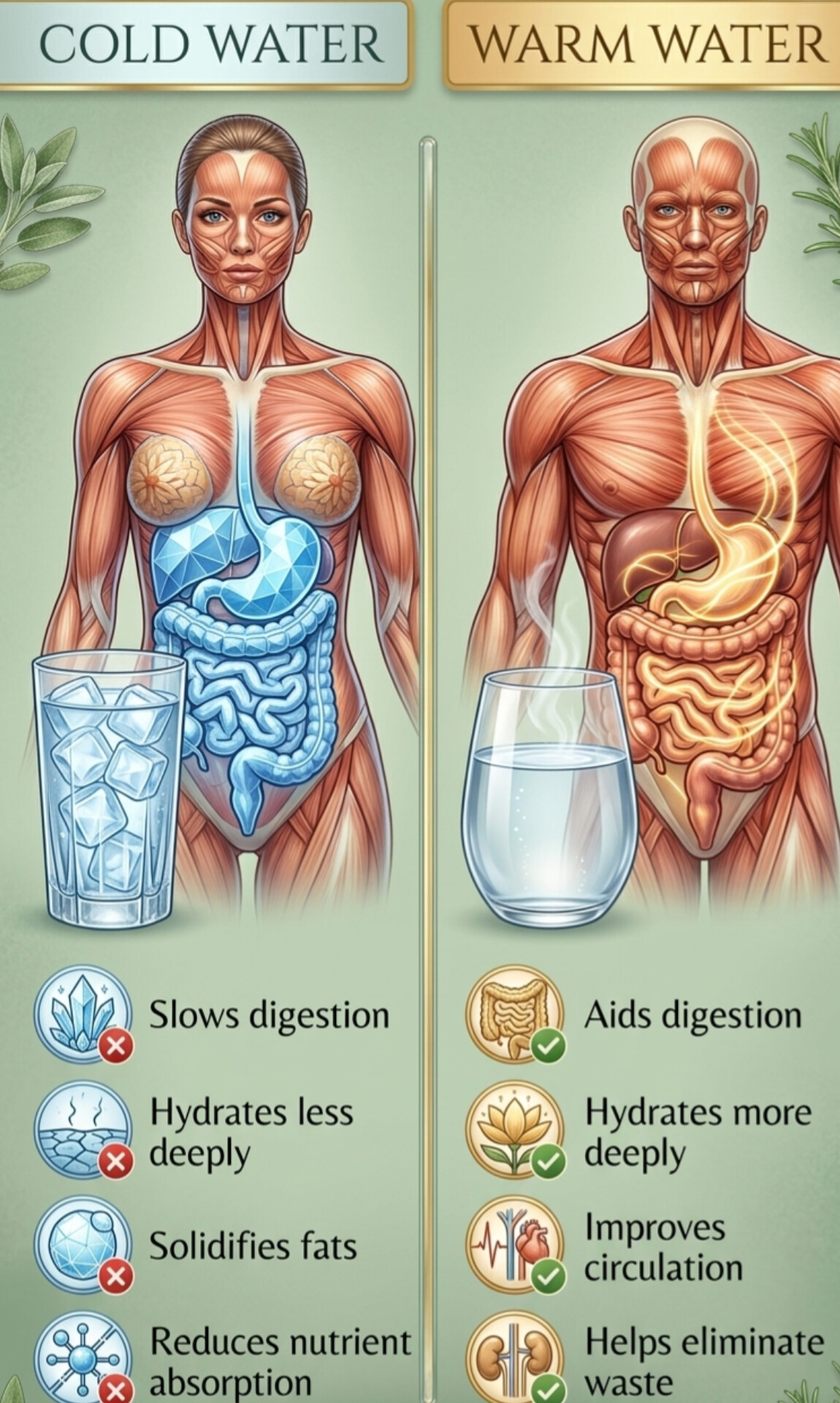
Cold water vs warm water: which should you drink? Learn how warm water aids digestion and hydration while cold water can slow digestion and solidify fats. Find out the best time for each…
Cold Water vs Warm Water: The Surprising Impact on Your Digestion and Health
We all know drinking water is essential. But does the temperature of your water matter? Yes, it does. The temperature of the water you drink directly affects digestion, hydration, circulation, and nutrient absorption.
Understanding cold water vs warm water benefits helps you choose the right option at the right time for better gut health, energy, and detoxification.
Why Water Temperature Affects Your Body
Your digestive system is warm and uses enzymes that work best at body temperature. Drinking very cold or very warm water triggers different physiological responses. Cold water constricts blood vessels and slows processes. Warm water relaxes tissues and stimulates flow. Let’s break down the key differences.
Cold Water: Potential Downsides for Digestion
Cold water feels refreshing, especially after a workout or on a hot day. However, drinking ice water with meals or first thing in the morning can create issues for many people.
1. Slows Digestion
Cold water can cause your stomach muscles to contract and slow down the entire digestive process. Your body must use energy to warm the water to body temperature before digestion can continue efficiently. This can lead to bloating and discomfort after meals.
2. Hydrates Less Deeply
Ice cold water may not absorb as quickly into your cells. The body prioritizes warming it first, which delays hydration at the cellular level. If you are dehydrated, room temperature or warm water rehydrates you faster and more effectively.
3. Solidifies Fats
Drinking cold water with fatty foods can cause dietary fats to solidify in your stomach. Solidified fats are harder for your body to break down and digest. This can lead to sluggish digestion and may contribute to constipation over time.
4. Reduces Nutrient Absorption
Because cold water slows digestive enzyme activity and constricts blood vessels in the gut, it can temporarily reduce how well you absorb nutrients from your food. For maximum nutrient uptake, your digestive system needs to stay warm and relaxed.
Warm Water: Key Benefits for Gut Health and Circulation
Warm water, or room temperature water, is often recommended in Ayurveda and traditional Chinese medicine. Modern science supports many of these benefits, especially around meals and in the morning.
1. Aids Digestion
Warm water stimulates digestive enzymes and helps break down food more efficiently. Drinking a cup of warm water 30 minutes before meals prepares your stomach. Sipping it during meals supports smooth digestion and reduces bloating.
2. Hydrates More Deeply
Warm water is absorbed faster by your tissues. It does not shock your system, so your body can use it immediately for cellular hydration, lymphatic flow, and joint lubrication. This makes it ideal first thing in the morning to rehydrate after sleep.
3. Improves Circulation
Heat causes blood vessels to dilate. Drinking warm water improves blood flow and circulation throughout your body. Better circulation means more oxygen and nutrients delivered to your organs, skin, and brain. It also helps relax muscles and reduce pain.
4. Helps Eliminate Waste
Warm water supports kidney and liver function. It stimulates bowel movements and helps your body flush toxins more effectively. A glass of warm lemon water in the morning is a classic practice for gentle daily detox and constipation relief.
So When Should You Drink Cold Water vs Warm Water?
Neither is bad all the time. Use them strategically.
Choose warm water or room temperature water when you want to support digestion, rehydrate deeply, or relax. Best times are first thing in the morning, 30 minutes before meals, and during meals.
Choose cold water when you need to lower body temperature fast. Best times are during intense exercise, on very hot days, or to reduce inflammation after a hard workout. Avoid ice water with heavy meals or if you have sensitive digestion.
Important: This article provides general wellness information. Water temperature preferences can vary based on individual health. If you have digestive disorders, consult a qualified healthcare professional for personalized advice.
Final Thoughts
The cold water vs warm water debate has a simple answer. Listen to your body and match the temperature to your goal. For daily hydration and digestive health, warm water wins. For cooling down and performance, cold water has its place. Small change, big impact.