
When and How to Take These Supplements: The Complete Guide to Maximum Absorption and Effectiveness
Taking supplements correctly is just as important as taking them at all. Many people invest in high-quality vitamins and minerals but fail to maximize their benefits because …they don’t understand the timing and method of consumption. The truth is, even the best supplements won’t work if your body can’t absorb them properly. This comprehensive guide will walk you through exactly when and how to take the most important supplements for optimal health results.
Understanding Supplement Timing and Absorption
Your digestive system works like a finely tuned machine. Each nutrient has specific conditions under which it absorbs best. Taking a supplement at the wrong time or with the wrong food can reduce its effectiveness by up to fifty percent. This isn’t about spending more money on supplements; it’s about making your current supplement routine actually work for your body.
The science of supplement absorption depends on several factors including stomach acid levels, the presence of certain foods, meal composition, and your individual digestive health. When you understand these principles, you transform your supplement routine from a guessing game into a precise wellness strategy.
Iron Supplements: Timing and Food Pairing Matter
Iron is one of the most commonly deficient minerals, especially among women and vegetarians. However, iron supplementation requires careful attention to timing and food choices. The best form of iron for supplementation is bisglycinate, which offers superior absorption compared to other forms.
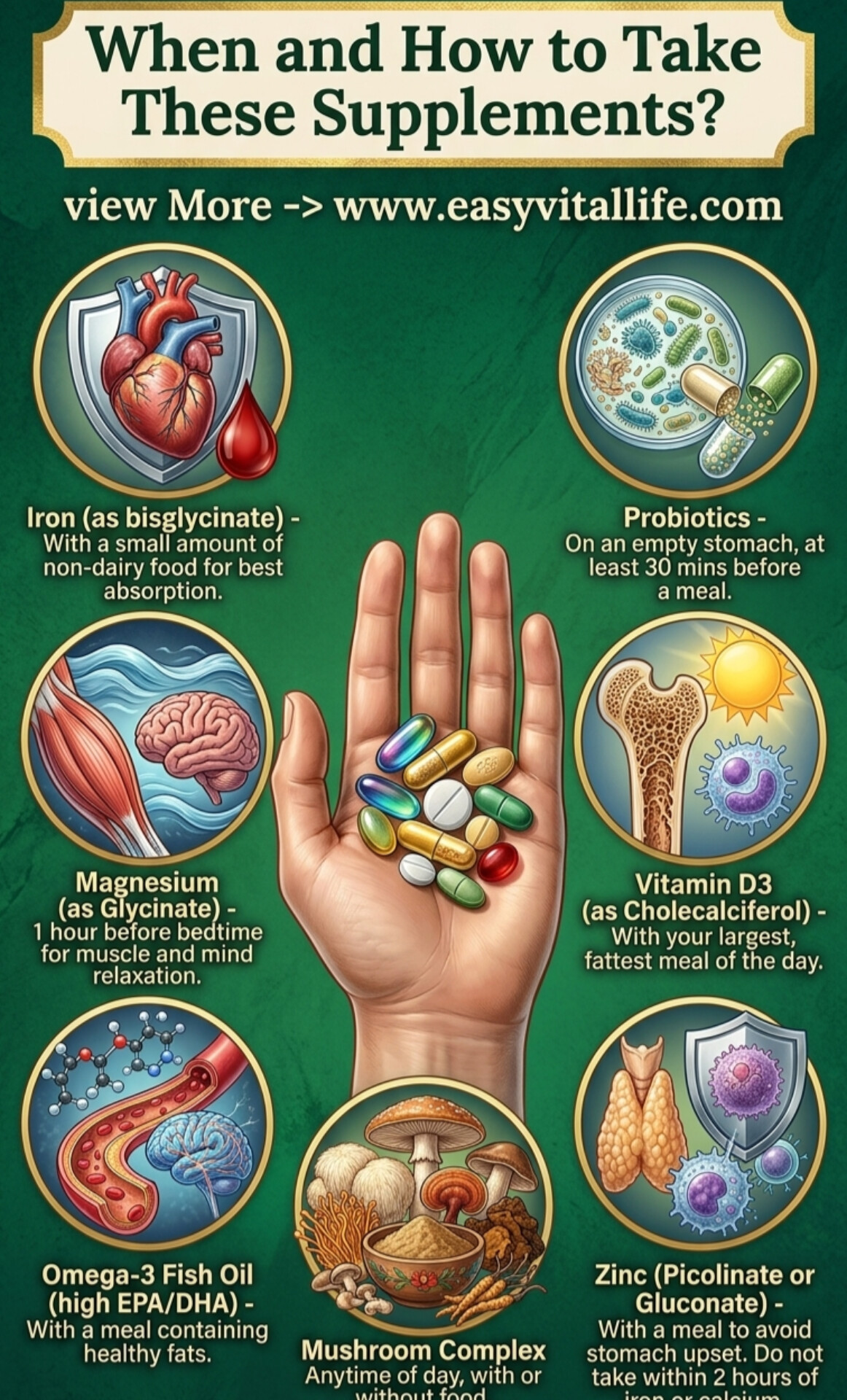
Iron bisglycinate should always be taken with a small amount of non-dairy food for optimal absorption. Your stomach acid helps break down iron and prepare it for intestinal absorption, so taking it with food enhances this process. However, avoid dairy products when taking iron because calcium can interfere with iron absorption. Instead, pair your iron supplement with a small serving of chicken, fish, beans, or leafy greens.
The ideal approach is to take your iron supplement in the morning with a light non-dairy breakfast. This timing ensures maximum absorption while minimizing any potential stomach upset. If you experience nausea from iron supplementation, try adjusting the timing or the amount of food you consume with it.
Probiotics: Empty Stomach Timing for Success
Probiotics are living organisms that need to survive the journey through your stomach acid before reaching your intestines where they do their beneficial work. This is why timing is absolutely critical for probiotic effectiveness.
Take probiotics on an empty stomach at least thirty minutes before eating a meal. This timing gives the beneficial bacteria the best chance of surviving your stomach’s acidic environment and reaching your intestines intact. When you take probiotics with food or immediately after eating, they may be damaged by stomach acid and become ineffective.
Morning is typically the best time for probiotics since your stomach has been empty overnight. Wait at least thirty minutes after taking your probiotic before eating breakfast. Some people prefer to take their probiotic immediately upon waking, then have their morning coffee or tea while waiting for the thirty-minute window to pass before eating food.
Magnesium Glycinate: Evening Dosing for Sleep and Relaxation
Magnesium is essential for hundreds of enzymatic reactions in your body, including muscle relaxation, stress reduction, and sleep quality. The glycinate form of magnesium is particularly effective because it’s highly absorbable and gentle on the digestive system.
The optimal time to take magnesium glycinate is one hour before bedtime. This timing allows the magnesium to be absorbed and reach your muscles and nervous system right when your body is preparing for sleep. The calming effects of magnesium will support deep relaxation, reduce muscle tension, and improve sleep quality.
Taking magnesium in the evening rather than with meals also prevents potential interactions with other nutrients. Magnesium is best absorbed on its own or with minimal food. Many people notice improvements in sleep quality and reduced muscle cramps within three to five days of starting an evening magnesium routine.
Vitamin D3: Combine With Your Largest Meal
Vitamin D3 is a fat-soluble vitamin, meaning it requires dietary fat for optimal absorption. This is a crucial distinction because water-soluble vitamins don’t have this requirement. When you take vitamin D3 without adequate fat, your body may not absorb it properly, wasting your money and missing out on its numerous health benefits.
The best time to take vitamin D3 is with your largest meal of the day, which typically provides the most dietary fat. This ensures maximum absorption. Pair your vitamin D3 supplement with foods containing healthy fats such as olive oil, avocado, salmon, nuts, or grass-fed butter.
Vitamin D3 is crucial for bone health, immune function, mood regulation, and calcium absorption. Taking it correctly ensures you receive its full spectrum of benefits. Most people should aim for consistent daily dosing rather than sporadic supplementation.
Omega-3 Fish Oil: Pair With Healthy Fats
Omega-3 fish oil is another fat-soluble supplement that requires dietary fat for absorption. Fish oil containing EPA and DHA supports brain health, cardiovascular function, and reduces inflammation throughout the body.
Take your omega-3 fish oil supplement with a meal containing healthy fats. This could be breakfast with eggs and avocado, lunch with salmon and olive oil, or dinner with nuts and legumes. The presence of dietary fat triggers bile production in your gallbladder, which is necessary for proper fat-soluble nutrient absorption.
Timing throughout the day is flexible with fish oil as long as you take it with a fat-containing meal. Some people prefer taking it with their largest meal to ensure adequate fat intake. Consistent daily supplementation with fish oil provides cumulative benefits for cardiovascular and cognitive health.
Zinc: Avoid Interactions and Timing Conflicts
Zinc is essential for immune function, wound healing, and protein synthesis. However, zinc supplementation requires careful consideration of timing to avoid nutrient interactions that reduce absorption.
Take zinc picolinate or zinc gluconate with a meal, but avoid taking it within two hours of iron or calcium supplements. Both iron and calcium can interfere with zinc absorption through competitive mechanisms. If you’re taking multiple supplements, space them appropriately throughout the day.
Many people experience stomach upset from zinc supplementation, which is why taking it with food is important. However, don’t take it with dairy products or high-calcium foods since calcium significantly interferes with zinc absorption. Instead, pair zinc with a light meal containing non-dairy protein and vegetables.
Mushroom Complex: Flexibility in Timing
Mushroom complex supplements containing varieties like reishi, lion’s mane, and cordyceps offer incredible flexibility in timing. These supplements can be taken anytime during the day, with or without food.
Many people choose to take mushroom complex first thing in the morning to support immune function and cognitive clarity throughout the day. Others prefer taking it in the afternoon for sustained energy without caffeine-related jitters. The flexibility makes mushroom complex perfect for people with unpredictable schedules.
You can even mix mushroom complex powder into your morning beverage such as coffee, tea, or smoothies. This versatility makes mushroom supplementation easy to incorporate into any daily routine without complicated timing considerations.
Building Your Personalized Supplement Schedule
Creating an effective supplement routine requires understanding the science behind each supplement and organizing them strategically throughout your day. Consider your personal schedule, meal times, and sleep pattern when designing your supplement protocol.
A well-designed morning routine might include taking your iron supplement with breakfast and your probiotic on an empty stomach thirty minutes before eating. Mid-day could involve taking your zinc and omega-3 fish oil with lunch. Evening could feature your magnesium glycinate one hour before bed along with your vitamin D3 with dinner if you haven’t taken it in the morning.
Remember that consistency matters more than perfection. Taking supplements at slightly different times is better than skipping doses because the timing isn’t exactly perfect. However, understanding these principles allows you to optimize your supplement absorption and maximize the health benefits of your investment.
Common Mistakes to Avoid
Many people make preventable mistakes with supplement timing that reduce effectiveness. Never take multiple minerals simultaneously as they compete for absorption. Space mineral supplements at least two hours apart when possible.
Avoid taking fat-soluble vitamins like D3 and fish oil on an empty stomach. Don’t take your probiotics with hot beverages as heat can damage the beneficial bacteria. Never combine iron supplements with coffee or tea as they reduce iron absorption.
Stop taking supplements just thirty minutes before major drug interactions if you’re on prescription medications. Some supplements can interact with medications, so consult your healthcare provider about your specific situation.
The Science Behind Supplement Absorption
Your gastrointestinal tract is selective about what it absorbs. The stomach acid environment, bile production, intestinal pH, and nutrient transporter availability all influence absorption rates. Understanding these factors helps explain why timing and food pairing matter so much.
Different supplements require different conditions for optimal absorption. Fat-soluble vitamins need bile and dietary fat. Minerals need adequate stomach acid and proper spacing from competing minerals. Probiotics need an undamaged protective coating to survive stomach acid.
Your individual digestive health also influences supplement absorption. People with low stomach acid, digestive disorders, or impaired bile production may need different strategies. If you have digestive concerns, consider consulting a functional medicine practitioner to optimize your supplement protocol.
Maximizing Your Supplement Investment
High-quality supplements represent a significant investment in your health. Taking them correctly ensures you receive maximum value. The small effort required to understand timing and absorption methods pays dividends through improved health outcomes.
Start with the supplements most critical for your health goals. Master their timing before adding additional supplements. This systematic approach prevents confusion and helps you identify which supplements make the biggest difference in how you feel.
Track your results and adjust your protocol as needed. Some people respond better to different supplement forms or slightly different timing. Your supplement routine should evolve based on your experience and changing health needs.
Conclusion: Simple Rules for Maximum Results
When and how you take supplements is just as important as which supplements you choose. Iron works best with non-dairy food. Probiotics require an empty stomach thirty minutes before meals. Magnesium should be taken one hour before bed. Vitamin D3 and omega-3 fish oil need dietary fat for absorption. Zinc should be taken with food but away from iron and calcium. Mushroom complex offers maximum flexibility in timing.
Following these evidence-based guidelines transforms your supplement routine from a guessing game into a precision wellness strategy. You’ll notice improvements in energy, sleep, immune function, and overall health when your supplements are properly absorbed and utilized by your body. Start implementing these timing strategies today and experience the difference that proper supplement timing makes in your health journey.