
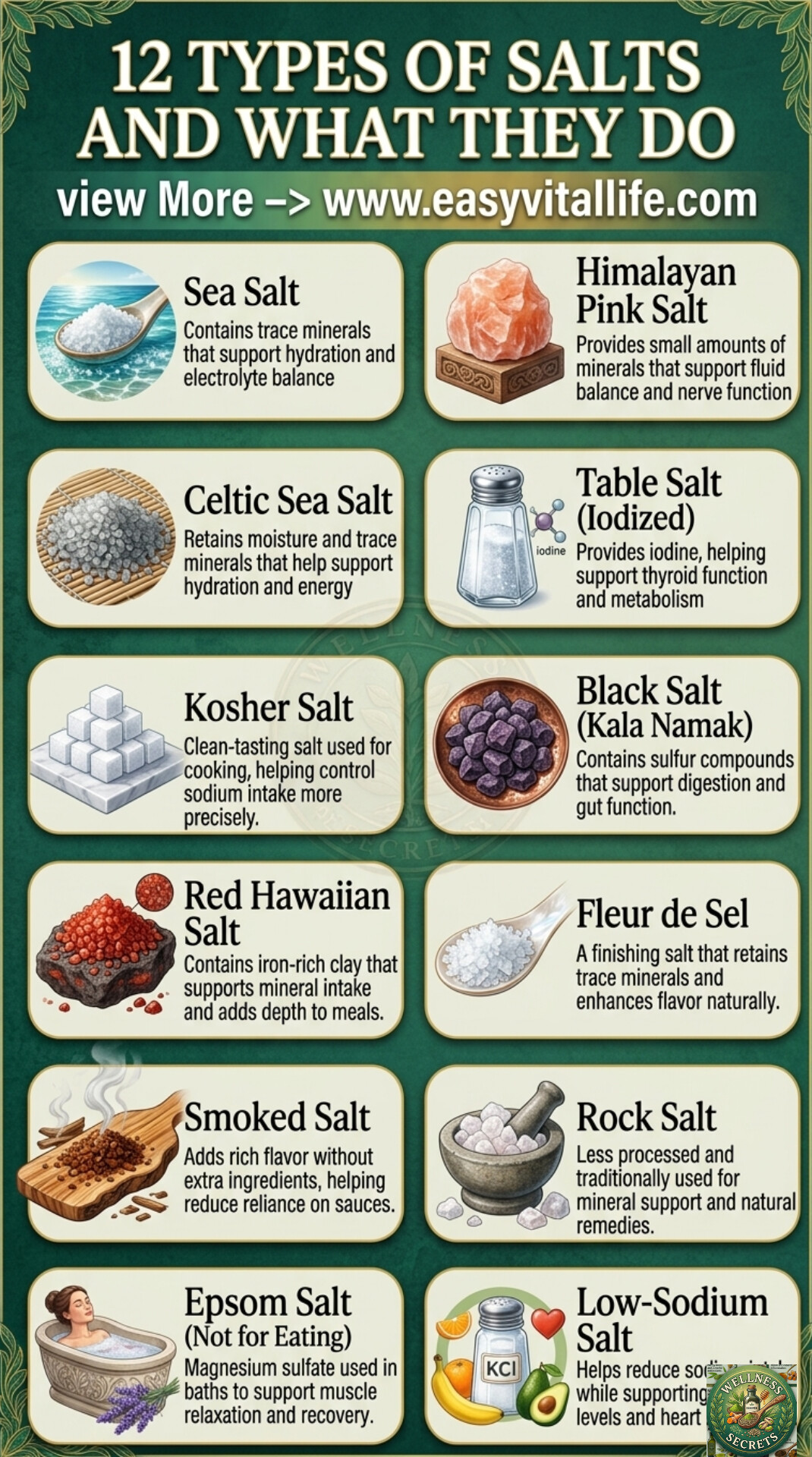
12 Types of Salts and What They Do: The Complete Guide to Choosing the Right Salt for Your Health and Cooking
Salt is one of the most misunderstood minerals in modern nutrition. For decades, people have been told to avoid salt entirely, but the truth is far more nuanced. Not all salts are created equal,… and different types of salt offer vastly different mineral profiles and health benefits. Understanding the various types of salt available can transform your cooking experience and support your overall wellness journey. This comprehensive guide explores twelve distinct types of salts, their unique properties, and how to use them effectively in your daily life.
The Science Behind Different Salt Types
When most people think of salt, they imagine the processed white crystals in a shaker. However, the world of salts is incredibly diverse. Each type of salt comes from different sources and undergoes different processing methods, which fundamentally changes its mineral composition and health benefits. The primary difference between salt types lies in their trace mineral content, crystal structure, and how they interact with your body.
Unrefined and minimally processed salts retain minerals lost during conventional processing. These trace minerals including magnesium, potassium, calcium, and iodine provide benefits beyond simple sodium chloride. Your body recognizes and absorbs these mineral-rich salts differently than processed white table salt. When you choose the right salt type, you’re not just seasoning your food; you’re providing your body with essential minerals that support vital functions.
Sea Salt: The Ocean’s Mineral Treasure
Sea salt is harvested directly from seawater through evaporation and contains trace minerals that reflect the ocean’s mineral composition. This salt type provides comprehensive mineral support including magnesium, potassium, calcium, and other electrolytes essential for hydration and electrolyte balance.
Sea salt contains sodium chloride along with over eighty trace minerals naturally present in seawater. These minerals support your nervous system, muscle function, and cellular hydration. The mineral content varies depending on where the salt was harvested, as different ocean regions have slightly different mineral profiles. Sea salt crystals are typically larger than table salt, which means they dissolve more slowly and provide a better culinary experience.
Use sea salt in everyday cooking, salad dressings, and finishing dishes. The complex mineral profile enhances both flavor and nutritional value. Many health-conscious cooks prefer sea salt because it provides mineral-rich seasoning without the additives found in conventional table salt.
Himalayan Pink Salt: Ancient Mineral Wealth
Himalayan pink salt comes from ancient salt deposits in the Himalayan Mountains, formed millions of years ago from evaporated seawater. This salt is over two hundred million years old and contains minerals deposited long before modern pollution existed. The distinctive pink color comes from trace minerals including iron oxide, which gives the salt its characteristic hue.
Himalayan pink salt provides small amounts of minerals that support fluid balance and nerve function. The mineral content includes magnesium, potassium, calcium, and other electrolytes necessary for proper cellular function. Despite popular claims about detoxification, the actual mineral content in any single serving is modest. However, when consumed regularly as a salt choice, Himalayan salt contributes to overall mineral intake.
The crystal structure of Himalayan salt is denser than sea salt, meaning you use less volume to achieve the same salty flavor. This makes Himalayan salt economical and allows you to reduce overall sodium intake while maintaining taste. Use Himalayan salt for everyday cooking, finishing dishes, and even in sole water, which is a traditional wellness practice involving salt-infused water.
Celtic Sea Salt: Moisture and Mineral Retention
Celtic sea salt is harvested from coastal regions of France and retains natural moisture from the clay-lined evaporation ponds used in traditional harvesting methods. The grey color of Celtic sea salt reflects its mineral-rich composition and moisture content. This salt type contains more trace minerals than standard sea salt because the traditional harvesting process preserves mineral compounds.
Celtic sea salt retains moisture and trace minerals that help support hydration and energy levels. The natural mineral content is slightly higher than conventional sea salt, and the moisture retention makes this salt feel slightly damp compared to dried salts. The minerals present include magnesium, potassium, and calcium, all essential for supporting various bodily functions.
Celtic sea salt works particularly well in finishing dishes where you want the salt to be noticeable. The slightly larger crystals and mineral content create a more complex flavor profile than refined white salt. Use Celtic sea salt in soups, stews, and cooked dishes where the salt dissolves and distributes throughout the food.
Table Salt (Iodized): Thyroid Support Through Iodine
Table salt is the most processed salt type, typically extracted through mining and then refined to remove impurities and minerals. Most table salt available in grocery stores is iodized, meaning iodine has been added to support thyroid function and prevent iodine deficiency. This iodization process was one of the great public health achievements of the twentieth century, nearly eliminating iodine deficiency disorders in developed countries.
Iodine supports thyroid function, which regulates metabolism and energy production. Without adequate iodine intake, your thyroid cannot function optimally, leading to fatigue, weight gain, and various metabolic issues. For people who don’t consume other iodine sources like seaweed or fish, iodized table salt provides a convenient way to ensure adequate iodine intake.
However, table salt undergoes heavy processing that removes beneficial trace minerals while adding anti-caking agents and other additives. The processing also results in finer crystals that dissolve quickly, which some consider less desirable for certain culinary applications. If you choose table salt, ensure it’s iodized to receive the thyroid-supporting benefits of iodine.
Kosher Salt: Clean Flavor for Precise Cooking
Kosher salt is a coarse-grained salt historically used in the koshering process of meat preparation. The larger crystals and clean taste make it popular among professional chefs and home cooks who want precise control over saltiness. Kosher salt contains pure sodium chloride without additives and tastes cleaner than table salt because it lacks the anti-caking agents found in conventional salt.
The larger crystal structure of kosher salt means you use less volume compared to table salt, allowing precise control over sodium intake. A pinch of kosher salt adds less sodium than a pinch of table salt because the crystals occupy more space. This makes kosher salt ideal for people monitoring sodium intake who still want flavorful food. Professional chefs prefer kosher salt for its clean taste and ease of use.
Kosher salt works well for all cooking applications including meat preparation, vegetable seasoning, and finishing dishes. The larger crystals make it easy to pinch and judge how much salt you’re adding, which is why professional chefs favor this type. Keep kosher salt in your kitchen for everyday cooking and precise salt control.
Black Salt (Kala Namak): Digestive Support and Sulfur Compounds
Black salt, also called Kala Namak, is a volcanic salt mined in India and other regions. The dark color comes from sulfur compounds and trace minerals combined with the salt. This salt type has been used in Ayurvedic medicine for centuries because of its unique properties and digestive support benefits.
Black salt contains sulfur compounds that support digestive function and gut health. Sulfur helps your body produce glutathione, a powerful antioxidant involved in detoxification and cellular protection. The mineral content also includes iron and magnesium, which support various physiological functions. Many people report improved digestion when incorporating black salt into their diet.
The taste of black salt is distinctive and slightly sulfurous, which some people love and others find challenging. Use black salt as a finishing salt where its unique flavor enhances the dish rather than overwhelming it. A small amount goes a long way, making black salt economical despite its premium pricing.
Red Hawaiian Salt: Iron-Rich Clay Support
Red Hawaiian salt gets its distinctive color from volcanic clay rich in iron oxide. This salt is harvested from Hawaiian salt ponds where traditional methods have been used for centuries. The iron-rich clay contributes significant mineral content including iron, which supports oxygen transport and energy production in your body.
Red Hawaiian salt contains trace amounts of iron from the volcanic clay, making it slightly different from other salt types. Iron supports hemoglobin production and oxygen delivery throughout your body. For people concerned about iron intake, incorporating red Hawaiian salt into cooking provides a natural source of trace iron.
The mineral depth of red Hawaiian salt makes it excellent for finishing dishes where you want the salt to be noticeable. The color adds visual appeal to dishes while providing mineral benefits. Use red Hawaiian salt on finished plates, in salt blends, or as a special finishing salt for premium dishes.
Fleur de Sel: Delicate Finishing Excellence
Fleur de Sel, meaning flower of salt, is a specialty salt harvested by hand from evaporation ponds in France and Portugal. Only the delicate crystals that form on the surface of the brine are harvested, making Fleur de Sel one of the most expensive salt types. The meticulous harvesting process preserves trace minerals while creating incredibly delicate crystals.
Fleur de Sel retains trace minerals naturally present in seawater while maintaining a delicate crystal structure perfect for finishing dishes. The flavor is complex and slightly sweet compared to conventional salt. Fleur de Sel enhances natural food flavors without overwhelming them, making it perfect for gourmet cooking.
Because of its premium nature and delicate crystals, Fleur de Sel should be reserved for finishing applications where you can appreciate its unique qualities. Sprinkle it over finished dishes, use it to season salads, or combine it with herbs for custom finishing salt blends. A little Fleur de Sel goes a long way in elevating the presentation and flavor of any dish.
Smoked Salt: Flavor Enhancement Without Extra Ingredients
Smoked salt is created by smoking sea salt or other salt types using wood smoke, creating rich flavor without adding extra ingredients. This salt type allows you to add complex smoky flavors to dishes without relying on sauces or additional seasonings. The smoking process infuses flavor while preserving the salt’s mineral content.
Smoked salt adds depth and richness to recipes without requiring extra ingredients, helping reduce reliance on heavy sauces or flavor additives. The smoking process uses real wood, creating authentic smoky flavor that enhances everything from grilled vegetables to fish to barbecue. Different woods create different flavor profiles, allowing you to choose smoked salt created from your preferred wood type.
Use smoked salt in meat preparations, grilled vegetables, seafood, and anywhere you want to add smoky complexity without extra ingredients. Smoked salt works particularly well in dry rubs for meat or as a finishing salt for dishes where smoky flavor enhances the overall dish.
Rock Salt: Traditional Mineral Support
Rock salt is mined from ancient salt deposits and undergoes minimal processing, making it one of the least processed salt types available. The large crystals contain minerals that accumulated over millions of years in these ancient deposits. Rock salt has been used traditionally for mineral support and in natural remedies for centuries.
Rock salt retains minerals naturally present in ancient evaporated seawater deposits. The mineral content is similar to sea salt but varies depending on the deposit’s location and composition. Because rock salt is less processed, it maintains its natural mineral profile without additives or refinement processes that remove beneficial compounds.
Rock salt works well for cooking applications and for creating salt solutions used in traditional wellness practices. The larger crystals are perfect for grinding in a mill, allowing you to control particle size based on your cooking needs. Rock salt is economical and provides excellent mineral content without premium pricing.
Epsom Salt: Magnesium for Muscles and Recovery
Epsom salt is technically not table salt but magnesium sulfate, making it fundamentally different from sodium chloride based salts. Despite its name, Epsom salt should never be consumed as a food seasoning. Instead, Epsom salt is used in baths and soaks where magnesium sulfate is absorbed through your skin.
Epsom salt supports muscle relaxation and recovery by providing magnesium through transdermal absorption. When dissolved in warm water, magnesium sulfate penetrates the skin and reaches muscles and tissues, promoting relaxation and reducing tension. The magnesium supports muscle recovery after exercise and reduces muscle soreness and tightness.
Use Epsom salt exclusively in bath soaks or foot soaks, never as a cooking ingredient. Add one to two cups of Epsom salt to warm bathwater and soak for twenty to thirty minutes to experience relaxation and muscle support benefits. Regular Epsom salt soaks support athletic recovery and general stress relief.
Low-Sodium Salt: Managing Sodium While Supporting Health
Low-sodium salt is formulated by replacing some sodium chloride with potassium chloride, creating a salt option for people managing sodium intake while maintaining flavor. These salts allow people with high blood pressure or other conditions requiring sodium restriction to continue enjoying salty flavors without compromising health goals.
Low-sodium salt provides flavor similar to regular salt while supporting potassium intake, which balances sodium’s effects on blood pressure and heart health. Potassium helps regulate fluid balance and supports cardiovascular function. For people requiring sodium restriction, low-sodium salt allows enjoyment of flavorful food without health risks.
Low-sodium salt works in most cooking applications where regular salt would be used. Some people notice a slightly different aftertaste compared to regular salt, but most find low-sodium salt an acceptable alternative. If your healthcare provider recommends sodium restriction, low-sodium salt makes maintaining flavor while adhering to dietary guidelines much easier.
Choosing Your Salt Types Strategically
Different salt types serve different purposes, and many people benefit from having multiple types on hand. Use unrefined sea salts like Celtic or sea salt for everyday cooking where you want mineral support. Reserve premium salts like Fleur de Sel for finishing applications where their unique properties shine. Use Himalayan or pink salt for the aesthetics and minerals when making sole water or specialty preparations.
Keep iodized table salt or another iodine source in your kitchen if you don’t consume other iodine sources regularly. Use smoked salt when you want smoky flavor without extra ingredients. Use kosher salt when you need precise salt control during cooking. Keep Epsom salt specifically for baths and soaks, never for consumption.
The key to salt selection is understanding your needs and choosing salt types that serve those needs effectively. Premium salts like Himalayan or Fleur de Sel offer minimal nutritional advantage over quality sea salt, but they may enhance your cooking experience. For maximum mineral support, choose unrefined sea salts harvested using traditional methods.
Salt Quality and Storage
The quality of salt impacts both its mineral content and cooking properties. Unrefined salts retain more minerals but may have slightly higher moisture content. Refined salts are drier and flow more easily but lose beneficial minerals during processing. Choose salt based on your intended use and quality standards.
Store salt in airtight containers away from moisture and humidity. Most salts remain stable for years when stored properly, though humidity can cause clumping. If salt becomes clumpy, it can still be used but may require grinding or breaking apart before use. Keep expensive specialty salts in original packaging to preserve freshness and protect your investment.
Conclusion: The Salt Choice Matters
The type of salt you choose impacts both the flavor of your food and the mineral content of your diet. Sea salt and Celtic sea salt provide excellent everyday mineral support through traditional harvesting methods. Himalayan pink salt offers aesthetic appeal and mineral content perfect for finishing applications. Iodized table salt provides necessary iodine for thyroid function. Kosher salt gives precise seasoning control. Black salt supports digestion. Hawaiian red salt provides iron-rich clay minerals. Fleur de Sel elevates gourmet cooking. Smoked salt adds flavor without additives. Rock salt provides traditional mineral support. Epsom salt supports muscle relaxation through baths. Low-sodium salt manages sodium intake while maintaining flavor.
Understanding these twelve salt types empowers you to make informed choices that align with your health goals and culinary preferences. Rather than viewing salt as something to eliminate, recognize it as a tool for supporting your health and enhancing your cooking when you choose quality salt types. Start exploring different salts to discover which types you prefer and how they improve both your food and your wellbeing.