
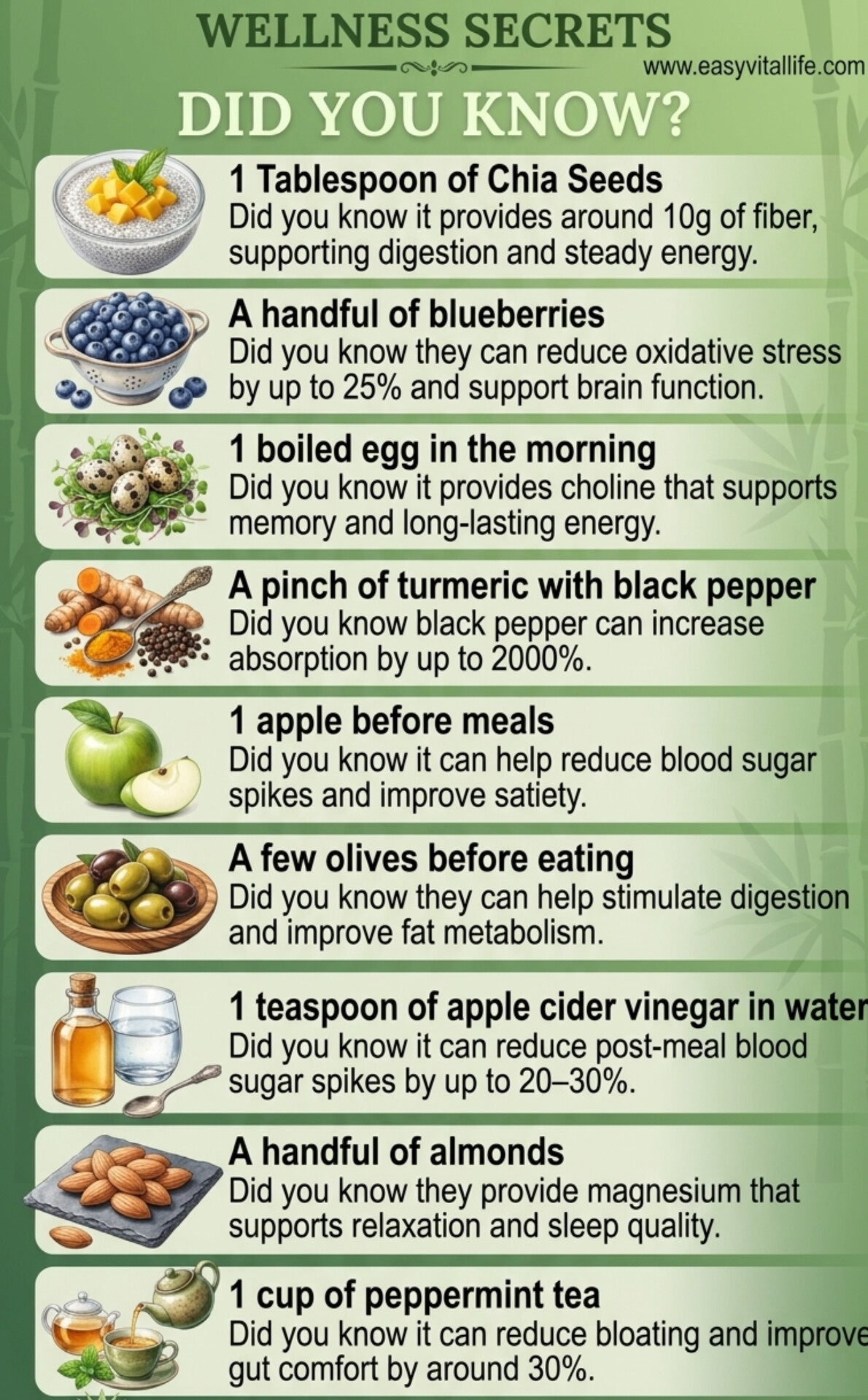
Sometimes the most powerful health changes do not come from expensive supplements, complicated diets, or drastic lifestyle overhauls. They come from small, consistent daily habits built around ordinary foods that most people already have in their kitchen. The science of nutrition is full of remarkable….
discoveries about common ingredients and once you understand what these foods are actually doing inside your body, you will never look at your meals the same way again.
Here are nine evidence-backed food facts that are simple enough to apply starting today, yet powerful enough to make a measurable difference in your digestion, energy, brain function, blood sugar, and sleep quality over time.
1 Tablespoon of Chia Seeds Provides Around 10g of Fiber
Chia seeds are one of the most fiber-dense foods on the planet relative to their size. A single tablespoon delivers approximately 10 grams of dietary fiber — a significant contribution toward the daily recommended intake of 25 to 38 grams that most people consistently fall short of. This fiber is primarily soluble, meaning it absorbs water and forms a thick gel in the digestive tract that slows glucose absorption, feeds beneficial gut bacteria, and keeps you feeling full and satisfied for hours after eating.
The steady-energy effect of chia seeds is not accidental by slowing the rate at which carbohydrates enter the bloodstream, they prevent the sharp blood sugar spikes and subsequent crashes that lead to afternoon fatigue, cravings, and overeating. Stir a tablespoon into your morning yogurt, oatmeal, or smoothie and your digestive system will feel the difference within days.
A Handful of Blueberries Can Reduce Oxidative Stress by Up to 25%
Blueberries are consistently ranked among the most antioxidant-rich foods available to humans, and their impact on oxidative stress the cellular damage caused by unstable free radical molecules is measurable and significant. Research has shown that regular blueberry consumption can reduce markers of oxidative stress by up to 25 percent, directly protecting brain cells, blood vessel walls, and DNA from the kind of cumulative damage that accelerates aging and drives chronic disease.
Their brain-supporting benefits are particularly well-documented. The flavonoids in blueberries — especially anthocyanins, the compounds responsible for their deep blue-purple color cross the blood-brain barrier and have been shown to improve memory, processing speed, and cognitive function. A daily handful is one of the simplest and most delicious habits you can build for long-term brain health.
1 Boiled Egg in the Morning Provides Choline for Memory and Energy
Eggs are one of the very few dietary sources of choline an essential nutrient that the body cannot produce in sufficient quantities on its own. Choline is a direct precursor to acetylcholine, the neurotransmitter most critically involved in memory formation, focus, and sustained cognitive performance. Low choline intake is associated with brain fog, poor memory, and reduced mental clarity.
Beyond brain function, the high-quality complete protein in a morning egg provides long-lasting energy by slowing gastric emptying and stabilizing blood sugar from the very start of the day. Starting your morning with a boiled egg instead of a carbohydrate-heavy breakfast is one of the most straightforward ways to improve mental sharpness and sustained energy throughout the entire day.
A Pinch of Turmeric With Black Pepper Increases Absorption by Up to 2000%
Turmeric has been celebrated for centuries in traditional medicine for its powerful anti-inflammatory and antioxidant properties, with curcumin its active compound being the subject of thousands of modern scientific studies. The challenge with curcumin is that on its own, it is very poorly absorbed by the human body. This is where black pepper performs what can only be described as a nutritional miracle.
Piperine, the active compound in black pepper, inhibits the enzymes that would otherwise rapidly break down curcumin before it can be absorbed, increasing its bioavailability by up to 2000 percent. This means that simply adding a pinch of black pepper to your turmeric dramatically transforms it from a minimally effective spice into a genuinely potent anti-inflammatory tool. Add this combination to soups, curries, warm milk, or scrambled eggs daily for maximum benefit.
1 Apple Before Meals Reduces Blood Sugar Spikes and Improves Satiety
The old saying about an apple a day has more scientific backing than most people realize. Eating an apple before a meal delivers a meaningful dose of pectin — a soluble fiber that forms a viscous layer in the small intestine, slowing the absorption of sugars and fats from the meal that follows. This mechanism directly blunts post-meal blood sugar spikes, reducing insulin demand and supporting healthier glucose management over time.
The satiety effect is equally valuable. The fiber and water content of an apple consumed before eating naturally reduces appetite and total calorie intake during the meal without any conscious effort or restriction. For anyone managing blood sugar, weight, or simply trying to avoid the energy crash that follows a large meal, a pre-meal apple is one of the most practical dietary strategies available.
A Few Olives Before Eating Stimulate Digestion and Improve Fat Metabolism
Olives are one of the most underappreciated pre-meal foods in Western diets. Eating a small portion of olives before a meal stimulates the production of bile the digestive fluid produced by the liver and stored in the gallbladder that is essential for breaking down dietary fats. Improved bile flow means more efficient fat digestion, better absorption of fat-soluble vitamins including A, D, E, and K, and reduced digestive discomfort after fatty meals.
The monounsaturated oleic acid in olives also has well-documented anti-inflammatory effects and supports healthy cholesterol balance. Making olives a regular pre-meal ritual is a simple Mediterranean habit with measurable metabolic benefits.
1 Teaspoon of Apple Cider Vinegar in Water Reduces Post-Meal Blood Sugar by 20 to 30%
Apple cider vinegar has attracted significant scientific interest for its effects on blood sugar regulation, and the research is genuinely compelling. The acetic acid in apple cider vinegar interferes with the enzymes responsible for breaking down complex carbohydrates in the digestive tract, slowing their conversion to glucose and reducing the speed at which sugar enters the bloodstream. Studies have shown that consuming one teaspoon diluted in a glass of water before or during a meal can reduce post-meal blood sugar spikes by 20 to 30 percent.
This effect is particularly meaningful for people managing insulin resistance, type 2 diabetes, or simply trying to maintain steady energy and avoid cravings throughout the day. Always dilute apple cider vinegar before consuming — undiluted, its acidity can damage tooth enamel and the esophageal lining over time.
A Handful of Almonds Provides Magnesium That Supports Relaxation and Sleep Quality
Magnesium is one of the most widespread nutritional deficiencies in the modern world, and its consequences extend far beyond muscle cramps and fatigue. Magnesium plays a central role in activating the parasympathetic nervous system the body’s rest-and-recover mode and in regulating GABA, the neurotransmitter that promotes calm, reduces anxiety, and facilitates deep, restorative sleep. Low magnesium levels are directly associated with insomnia, restless sleep, nighttime waking, and elevated stress responses.
A daily handful of almonds delivers a meaningful dose of magnesium along with vitamin E, healthy fats, and protein. Eating almonds as an afternoon or evening snack is one of the simplest evidence-backed strategies for improving both sleep onset and sleep quality without any pharmaceutical intervention.
1 Cup of Peppermint Tea Can Reduce Bloating and Improve Gut Comfort by Around 30%
Peppermint has one of the longest and most consistent track records in both traditional and evidence-based medicine as a remedy for digestive discomfort. The menthol compounds in peppermint act as natural antispasmodics they relax the smooth muscle lining of the gastrointestinal tract, reducing painful spasms, cramping, and the uncomfortable pressure of trapped gas. Clinical studies have shown that peppermint can reduce symptoms of bloating and gut discomfort by approximately 30 percent in people with irritable bowel syndrome and general digestive sensitivity.
A cup of peppermint tea after meals particularly after heavier or gas-producing foods is one of the most time-tested, side-effect-free, and genuinely effective tools for digestive comfort available.
The Bottom Line
The most profound health transformations rarely begin with dramatic change. They begin with awareness — knowing what your food is actually doing inside your body — and then applying that knowledge one small habit at a time. Chia seeds in your morning bowl. Blueberries as your afternoon snack. An egg at breakfast. Turmeric and black pepper in your cooking. An apple before lunch. A cup of peppermint tea after dinner.
None of these habits are expensive, complicated, or time-consuming. But practiced consistently every day, they compound into a level of energy, clarity, digestive comfort, and metabolic health that no shortcut can replicate.
Eat smart. Live better. — easyvitallife.com