
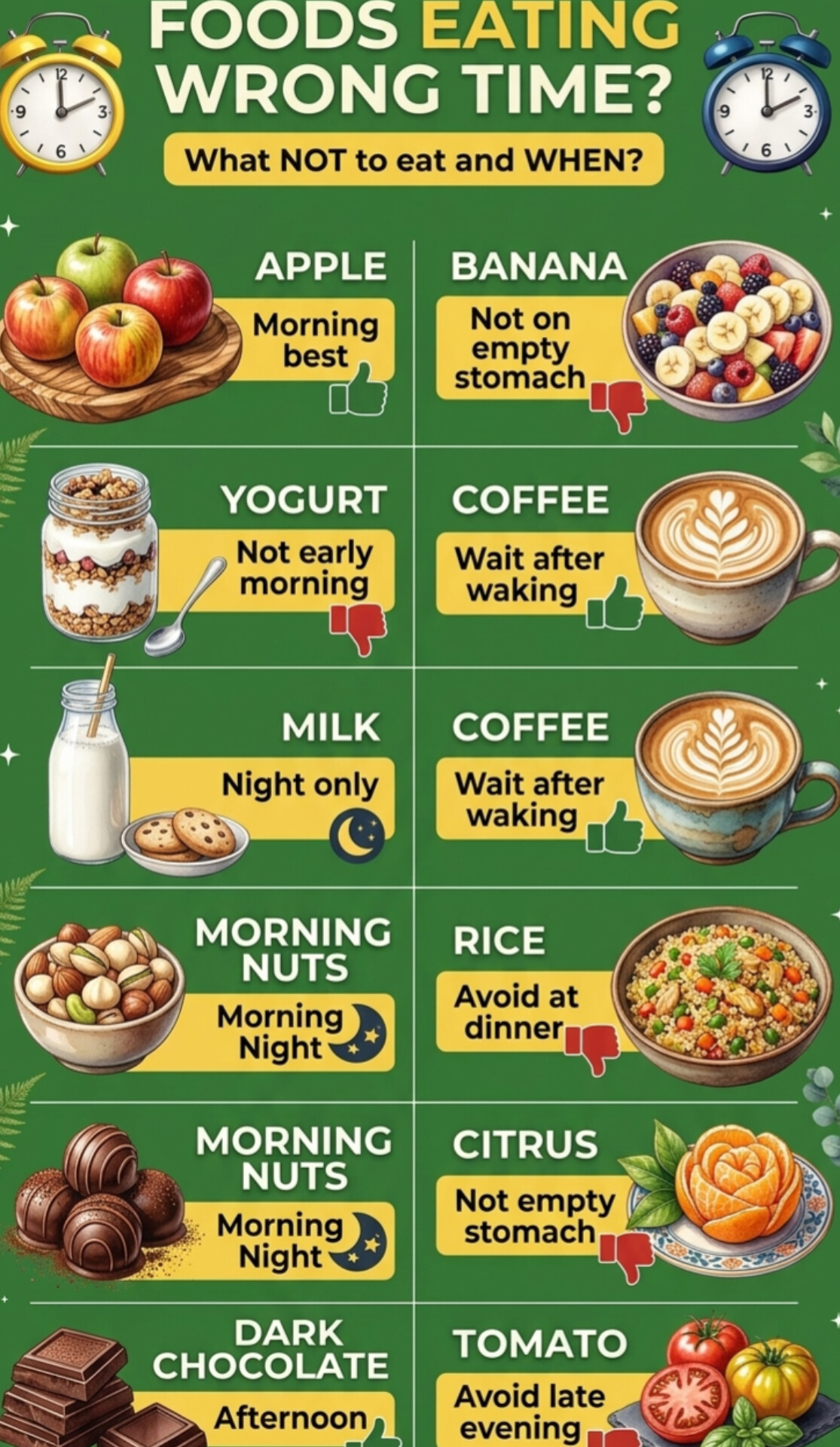
Are you eating healthy foods at the wrong time? Learn when to eat apples, bananas, yogurt, coffee, milk, rice, and more. Fix your food timing for better digestion, energy, and sleep…
Eating Foods at the Wrong Time? What NOT to Eat and WHEN for Better Digestion
You can eat all the right foods and still feel bloated, tired, or restless. Why? Timing matters. Your body’s digestion, hormones, and metabolism change throughout the day. Eating certain foods at the wrong time can cause acid reflux, blood sugar crashes, poor sleep, and low energy.
Here is your science-backed guide on what NOT to eat and WHEN to eat popular foods for optimal health.
Why Food Timing Impacts Your Gut and Energy
Your circadian rhythm controls stomach acid, enzyme production, and insulin sensitivity. In the morning, your body is primed for fiber and protein. At night, digestion slows down to prepare for sleep. Eating against this rhythm can trigger indigestion, fat storage, and disrupted sleep. Match your food to your body clock.
The Right Time to Eat These 10 Common Foods
1. Apples: Morning Best
Apples are high in pectin fiber and natural sugars. Eating an apple in the morning gives you a clean energy boost and supports bowel movements. The fiber feeds good gut bacteria and keeps you full. Avoid apples late at night. The fiber and acidity can cause bloating and disrupt sleep for some people.
2. Bananas: Not on an Empty Stomach
Bananas are healthy but eating them first thing on an empty stomach can spike blood sugar and magnesium levels too fast. This may lead to an energy crash later. Pair bananas with protein or fat like nuts or yogurt. The best time is mid-morning or as a pre-workout snack, not immediately after waking.
3. Yogurt: Not Early Morning
Cold yogurt on an empty stomach can shock your digestive system and increase mucus production for some people. The probiotics in yogurt also survive better when your stomach is not highly acidic from overnight fasting. Eat yogurt as a mid-morning snack or afternoon snack, not the very first thing you eat.
4. Coffee: Wait After Waking
Your cortisol, the alertness hormone, is naturally highest 30 to 60 minutes after you wake up. Drinking coffee immediately blunts this natural spike and builds caffeine dependence. Wait 60 to 90 minutes after waking to have your first cup. This gives you better energy and prevents the afternoon crash.
5. Milk: Night Only
Milk contains tryptophan and melatonin, which promote relaxation and sleep. It also takes time to digest. Drinking milk at night can help you fall asleep faster and support muscle recovery. Avoid large amounts of milk in the morning. It can feel heavy and cause mucus or sluggishness for some people.
6. Nuts: Morning or Night
Nuts are a timing win. Eating nuts in the morning provides healthy fats and protein for sustained energy and blood sugar control. Eating a small handful at night gives you magnesium and tryptophan to support sleep. Avoid salted or sugary nuts late at night. Raw or lightly roasted is best.
7. Rice: Avoid at Dinner
White rice is high glycemic and digests quickly. Eating it at dinner, when your insulin sensitivity is lowest, can spike blood sugar and promote fat storage overnight. It may also cause energy dips that disrupt sleep. Eat rice at lunch when your metabolism is most active. Choose brown rice or pair it with protein and fiber.
8. Citrus Fruits: Not on an Empty Stomach
Oranges, grapefruit, and other citrus are acidic. On an empty stomach, they can irritate the stomach lining and trigger acid reflux or heartburn in sensitive people. Eat citrus after a meal or as an afternoon snack. The vitamin C will absorb better with other foods present.
9. Dark Chocolate: Afternoon Best
Dark chocolate contains caffeine and theobromine. These are mild stimulants that boost focus and mood. The afternoon is perfect for a small square to beat the 3 PM slump. Avoid dark chocolate late at night. It can interfere with melatonin and delay sleep onset, even if you do not feel wired.
10. Tomato: Avoid Late Evening
Tomatoes are acidic and can trigger acid reflux when you lie down. They also contain solanine, which may cause inflammation for some people at night. Enjoy tomatoes at lunch or early dinner in salads, sauces, or soups. Avoid them as a late-night snack.
How to Fix Your Food Timing Today
You do not need to overhaul your diet. Start with one swap. Move your coffee to 90 minutes after waking. Switch your late rice dinner to lunchtime. Have your apple with breakfast instead of before bed.
Track how you feel. Better energy, less bloat, and deeper sleep are signs your timing is improving.
Important: Food timing tips are for general wellness. Individual tolerance varies. If you have GERD, IBS, diabetes, or other conditions, please consult a qualified healthcare or nutrition professional for personalized guidance.
Final Thoughts
Healthy food at the wrong time can work against you. Use this guide to align your meals with your body clock. When you eat matters as much as what you eat. Time it right and feel the difference.