Hibachi Steak and Scallops Combo Plate with Fried Rice, Noodles, and Yum Yum Sauce
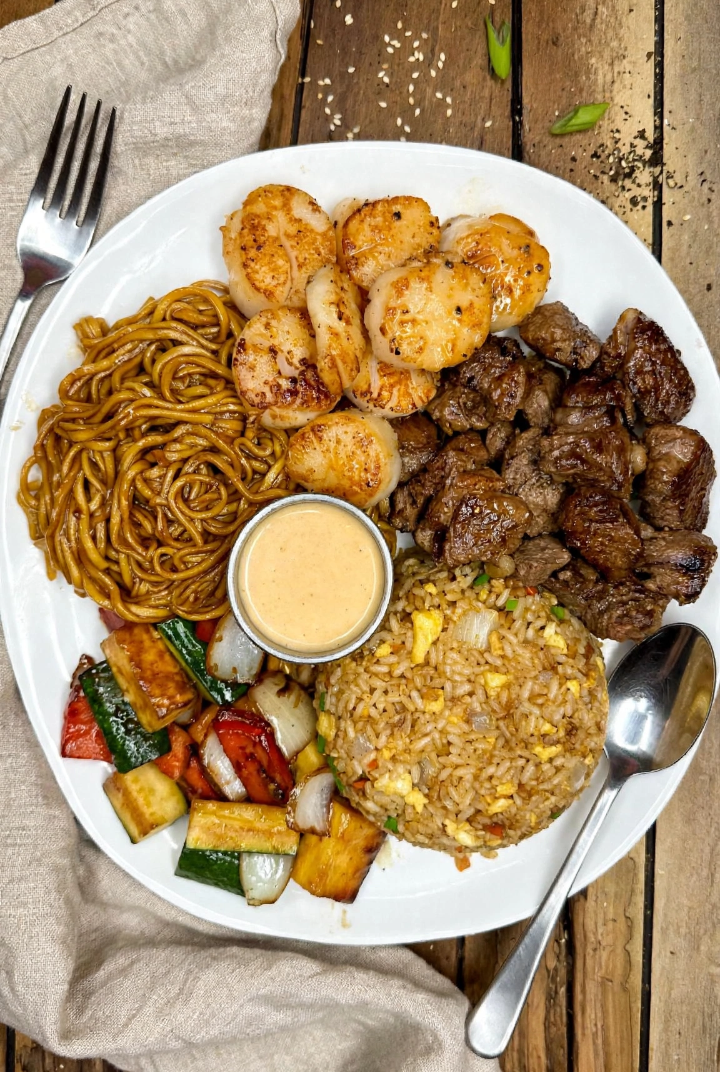
This is the hibachi combo plate that makes you forget about calling for a reservation. Perfectly seared scallops with a golden crust, tender steak bites glazed in savory butter and soy, a pile of glossy yakisoba noodles, a scoop of classic hibachi fried rice, and a side of charred vegetables, all finished with a generous dollop of creamy yum yum sauce. It’s the full hibachi steakhouse experience, built entirely on your own stovetop or griddle.
This recipe walks through every component so you can build the complete plate at home, whether you’re cooking for a weeknight dinner or hosting a hibachi-style night for friends and family.
Why You’ll Love This Recipe
A true restaurant-style combo plate with five components working together perfectly.
Steak and scallops together a surf and turf twist on the classic hibachi plate.
Better than takeout and a fraction of the cost.
Great for meal prep, since every component reheats well.
That yum yum sauce ties the entire plate together with rich, creamy flavor.
Ingredients
For the Hibachi Steak
- 1.5 lbs sirloin or ribeye steak, cut into bite-sized cubes
- 2 tablespoons soy sauce
- 1 tablespoon sesame oil
- 2 tablespoons unsalted butter
- 2 cloves garlic, minced
- Salt and black pepper, to taste
For the Seared Scallops
- 1 lb large sea scallops, patted very dry
- 2 tablespoons butter
- 1 tablespoon oil (for a high smoke point)
- 1 clove garlic, minced
- Salt and black pepper, to taste
- A squeeze of fresh lemon juice
For the Hibachi Fried Rice
- 3 cups cooked and chilled white rice (day-old is best)
- 2 tablespoons butter
- 1/2 small onion, finely diced
- 1 carrot, finely diced
- 2 green onions, sliced
- 2 large eggs, lightly beaten
- 3 tablespoons soy sauce
- 1 teaspoon sesame oil
For the Yakisoba Noodles
- 12 oz yakisoba noodles (or substitute lo mein or ramen noodles)
- 2 tablespoons vegetable oil
- 1/2 small onion, thinly sliced
- 1 carrot, julienned
- 1/4 cup yakisoba sauce (or a mix of 3 tablespoons soy sauce, 1 tablespoon oyster sauce, 1 tablespoon Worcestershire sauce, and 1 teaspoon sugar)
For the Grilled Vegetables
- 1 zucchini, sliced
- 1 cup mixed bell peppers, sliced
- 1/2 small onion, sliced into wedges
- 2 tablespoons butter
- 1 tablespoon soy sauce
- Salt and pepper, to taste
For the Yum Yum Sauce
- 1 cup mayonnaise
- 2 tablespoons ketchup
- 1 tablespoon melted butter
- 1 teaspoon garlic powder
- 1 teaspoon paprika
- 1 tablespoon sugar
- 1–2 tablespoons water, to thin
- A small splash of rice vinegar, to taste
Equipment Needed
- Large flat-top griddle, wok, or two large skillets
- Sharp knife and cutting board
- Mixing bowls
- Spatula or tongs
Step-by-Step Instructions
Step 1: Make the Yum Yum Sauce
Whisk together the mayonnaise, ketchup, melted butter, garlic powder, paprika, and sugar until smooth. Thin with water to a drizzle-able consistency and add a splash of rice vinegar for brightness. Refrigerate for at least 30 minutes before serving to let the flavors meld.
Step 2: Prep Everything First
Hibachi cooking moves quickly, so cube your steak, pat the scallops completely dry, slice all your vegetables, and cook and chill your rice ahead of time. Have every ingredient measured and within reach before you turn on the heat.
Step 3: Sear the Scallops
Pat the scallops dry one more time right before cooking, this is the key to a good sear. Heat a skillet over high heat with the oil until just smoking. Add the scallops in a single layer without crowding the pan and sear for 2 minutes without moving them. Flip, add the butter and garlic, and cook for another 1.5 to 2 minutes, basting with the butter, until golden on both sides. Finish with a squeeze of lemon juice and set aside.
Step 4: Cook the Steak
In the same or a separate hot skillet, add butter and the steak cubes in a single layer, working in batches if needed. Sear for 2–3 minutes per side until deeply browned. In the last minute, add the garlic, remaining butter, soy sauce, sesame oil, salt, and pepper, tossing to coat. Remove and set aside.
Step 5: Sauté the Vegetables
Add butter to the pan and toss in the zucchini, bell peppers, and onion. Sauté over medium-high heat for 5–7 minutes until crisp-tender and lightly charred. Season with soy sauce, salt, and pepper, then set aside.
Step 6: Make the Yakisoba Noodles
If using dried yakisoba noodles, cook according to package instructions and drain. Heat oil in a large skillet or wok over medium-high heat and sauté the sliced onion and julienned carrot for 2–3 minutes. Add the noodles and yakisoba sauce, tossing well to coat evenly, and cook for another 3–4 minutes until the noodles are glossy and heated through.
Step 7: Make the Hibachi Fried Rice
Melt butter in a large skillet or wok over medium-high heat. Sauté the diced onion and carrot for 2–3 minutes until softened. Push everything to one side, pour in the beaten eggs, and scramble until just set. Add the cold rice, breaking up clumps, and toss everything together. Drizzle with soy sauce and sesame oil, stir in the green onions, and cook for another 3–4 minutes, pressing the rice occasionally for a slightly crispy texture.
Step 8: Plate the Full Combo
Arrange the seared scallops, steak bites, yakisoba noodles, fried rice, and grilled vegetables together on a large plate, just like a hibachi grill presentation. Add a small dish or dollop of yum yum sauce in the center for dipping and drizzling.
Recipe Tips for the Best Hibachi Combo Plate
Dry scallops sear better. Pat them dry thoroughly, and avoid moving them for the first two minutes so a real crust develops.
Use day-old rice for the fried rice. Fresh rice has too much moisture and will turn mushy instead of crisping up.
Cook components in stages, not all at once. This keeps every element properly seared instead of steamed, which is the real secret to that hibachi restaurant flavor.
High heat is essential. Hibachi cooking depends on quick, hot searing, so don’t be afraid to crank the heat for the steak and scallops.
Let the yum yum sauce rest. The flavor deepens noticeably after 30 minutes to an hour in the refrigerator.
Recipe Variations
Shrimp instead of scallops: Substitute large shrimp for a more budget-friendly option, searing for about 1.5–2 minutes per side.
Chicken hibachi: Add or swap in cubed chicken thighs alongside or instead of the steak.
Spicy yum yum sauce: Stir in a teaspoon of sriracha or chili garlic sauce for heat.
Low-carb version: Skip the noodles and rice, and double up on the grilled vegetables instead.
Garlic butter finish: Add an extra pat of garlic butter over the steak and scallops right before serving for an even richer finish.
What to Serve With This Hibachi Plate
- Miso soup to start
- A simple ginger salad
- Steamed edamame
- Iced green tea or a light Japanese lager
Storage and Reheating
Store each component in separate airtight containers in the refrigerator for up to 3 days. Reheat the rice, steak, and noodles in a hot skillet with a touch of butter or oil to revive their texture. Scallops are best reheated gently over low heat or eaten cold in a salad the next day, since high heat can make them rubbery when reheated.
Frequently Asked Questions
How do I know when scallops are done cooking?
Properly cooked scallops should be opaque throughout with a golden crust on both sides, and should feel firm but still slightly springy to the touch. Overcooked scallops become tough and rubbery, so aim for about 2 minutes per side over high heat.
Can I make the whole combo plate on a flat-top griddle?
Yes, a large flat-top griddle, like a Blackstone, is actually ideal for this recipe since it gives you enough surface area to cook multiple components at once, closely mimicking the real hibachi restaurant setup.
What’s the difference between yakisoba noodles and lo mein noodles?
Yakisoba noodles are a Japanese wheat noodle typically pre-steamed and sold ready to stir-fry, while lo mein noodles are a Chinese wheat noodle with a slightly different texture. Both work well in this recipe if you can’t find one or the other.
Why is my hibachi rice mushy instead of crispy?
This is almost always caused by using freshly cooked, warm rice instead of cold, day-old rice. The extra moisture in fresh rice steams instead of frying properly in the pan.
If you make this hibachi steak and scallops combo plate, let us know in the comments how it turned out, and save this recipe for your next hibachi night at home!