
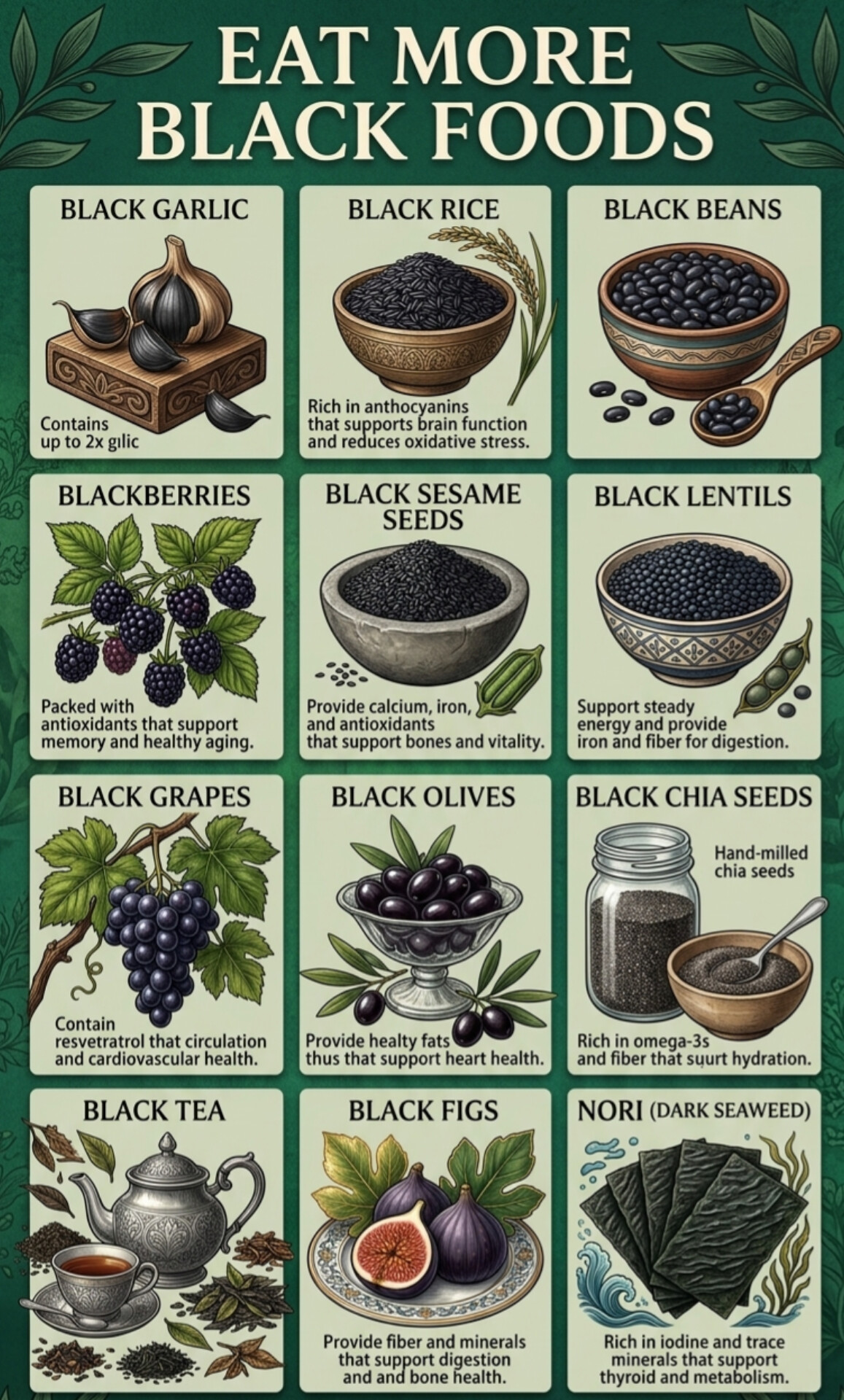
Eat More Black Foods: The Complete Nutritional Guide to Nature’s Most Powerful Superfoods
Black foods represent some of nature’s most nutrient-dense superfoods, yet they remain overlooked in most people’s diets. The deep black pigmentation indicates the presence of powerful anthocyanins, polyphenols, and other phytonutrients that provide remarkable health benefits ranging from brain protection to cardiovascular support to anti-aging effects…
Understanding which black foods to prioritize and how to incorporate them into your diet allows you to harness the extraordinary healing power of these nutritional powerhouses. This comprehensive guide explores twelve exceptional black foods and explains the science behind their transformative health benefits.
The Science Behind Black Food Pigmentation
The black color in foods comes from anthocyanins and other flavonoid compounds that protect plants from ultraviolet radiation and oxidative stress. When you consume these pigments, your body recognizes them as powerful antioxidants that provide the same protective benefits plants require. The darker the food, the more concentrated these protective compounds are present, making black foods exceptional sources of antioxidant support.
Research demonstrates that people consuming anthocyanin-rich black foods have significantly lower rates of cardiovascular disease, cognitive decline, cancer, and premature aging. The compounds work through multiple mechanisms including direct antioxidant action, anti-inflammatory pathways, and epigenetic effects that influence gene expression. By consuming black foods regularly, you activate your body’s natural defense systems against disease.
Black Garlic: The Potent Immune and Cardiovascular Supporter
Black garlic is fermented white garlic that develops its dark color through a heating and aging process. This transformation increases the concentration of bioactive compounds up to twice that of fresh white garlic. Black garlic provides all the benefits of regular garlic with enhanced potency and improved bioavailability.
Black garlic contains s-allyl cysteine, a compound with remarkable cardiovascular protective properties. Research demonstrates that black garlic reduces blood pressure, improves cholesterol ratios, and prevents arterial plaque formation through multiple mechanisms. The sulfur compounds in black garlic support liver detoxification and enhance immune function.
Beyond cardiovascular benefits, black garlic provides neuroprotective compounds that support brain health and cognitive function. The polysaccharides in black garlic strengthen immune function and increase antibody production. The enhanced concentration of antioxidants provides protection against oxidative stress and inflammation underlying chronic disease.
Consume two to three cloves of black garlic daily, either raw or incorporated into meals. The mild, sweet flavor makes black garlic far more palatable than fresh garlic while providing superior health benefits. Black garlic can be consumed alone as a snack or incorporated into virtually any savory dish.
Black Rice: The Brain-Protective Whole Grain Superfood
Black rice, also called forbidden rice due to its historical restriction to Chinese royalty, provides exceptional nutritional value through its remarkable anthocyanin content. Unlike white rice which loses most nutrients during processing, black rice retains its nutrient-rich bran layer providing comprehensive nutrition.
Black rice contains higher concentrations of anthocyanins than blueberries, the commonly recognized antioxidant champion. These anthocyanins specifically support brain function, memory retention, and protection against age-related cognitive decline. Research demonstrates that regular black rice consumption improves cognitive performance and reduces Alzheimer’s disease risk.
The fiber content in black rice supports healthy cholesterol levels and stable blood sugar through multiple mechanisms. The insoluble fiber feeds beneficial gut bacteria, which produce compounds supporting immune function and mental health through the gut-brain axis. The resistant starch in black rice provides sustained energy without blood sugar spikes.
Black rice also provides iron, magnesium, and manganese, minerals essential for energy production and neurological function. The combination of anthocyanins, fiber, and minerals makes black rice a comprehensive nutrition powerhouse.
Consume one-half to one cup of cooked black rice daily as a side dish, mixed into salads, or as the base for grain bowls. Black rice pairs well with vegetables and lean proteins, creating balanced, nutrient-dense meals.
Black Beans: The Protein and Fiber Powerhouse
Black beans provide exceptional concentrations of protein, fiber, and polyphenol antioxidants, making them ideal for vegetarians and anyone seeking plant-based nutrition. One cup of cooked black beans provides fifteen grams of protein and fifteen grams of fiber, addressing both macronutrient and micronutrient needs.
The polyphenol content in black beans provides antioxidant and anti-inflammatory benefits supporting overall health. Research demonstrates that black bean consumption reduces inflammation markers and improves cardiovascular risk profiles. The resistant starch in black beans feeds beneficial gut bacteria, supporting digestive and metabolic health.
Black beans also provide folate, a B vitamin essential for cellular function, DNA synthesis, and neurological health. The iron content, particularly when consumed with vitamin C sources, supports oxygen delivery and energy production. The magnesium in black beans supports hundreds of enzymatic reactions throughout the body.
Consume one-half to one cup of black beans daily, incorporated into soups, salads, rice dishes, or prepared as a standalone side dish. Black beans are economical, shelf-stable, and provide superior nutrition compared to processed foods at similar price points.
Blackberries: The Memory and Aging-Prevention Berry
Blackberries contain exceptional anthocyanin concentrations alongside additional polyphenol antioxidants providing comprehensive protective benefits. These antioxidants specifically accumulate in brain tissue where they prevent oxidative damage and inflammation underlying cognitive decline.
Research demonstrates that blackberry consumption improves memory, processing speed, and cognitive flexibility in both younger and older adults. The anthocyanins in blackberries activate cellular repair mechanisms and support neuroplasticity, your brain’s ability to form new connections throughout life. Regular blackberry consumption is associated with reduced Alzheimer’s disease risk and preserved cognitive function in aging.
Beyond brain health, blackberries provide cardiovascular benefits through blood pressure reduction and improved cholesterol profiles. The fiber content supports digestive health and stable blood sugar. The vitamin C content supports immune function and collagen synthesis for skin health.
Consume one cup of fresh or frozen blackberries daily, either as a standalone snack or incorporated into smoothies, salads, or breakfast bowls. Frozen blackberries provide equivalent nutritional value to fresh berries year-round at lower cost.
Black Sesame Seeds: The Bone-Building Mineral Source
Black sesame seeds provide exceptional mineral content including calcium, iron, magnesium, and zinc. The calcium content is remarkably bioavailable compared to other plant sources, making black sesame ideal for people avoiding dairy. The iron content, particularly when consumed with vitamin C, supports oxygen delivery and energy production.
Beyond minerals, black sesame seeds contain lignans, polyphenol compounds with hormonal balancing and anti-inflammatory properties. These compounds support cardiovascular health and may reduce cancer risk through multiple protective mechanisms. The antioxidant content in black sesame provides general protection against oxidative stress.
The healthy fats in black sesame seeds support nutrient absorption and provide satiety. The sesame paste or tahini provides similar benefits in a more concentrated form. Black sesame oil provides intense antioxidant benefits in small doses.
Consume one ounce of black sesame seeds daily, sprinkled on salads or incorporated into smoothies. Black sesame paste can be consumed alone or mixed into other foods. Black sesame oil provides concentrated benefits in small amounts.
Black Lentils: The Energy and Iron-Rich Legume
Black lentils, also called beluga lentils, provide exceptional protein and iron content alongside polyphenol antioxidants. One cup of cooked black lentils provides eighteen grams of protein and nearly eight milligrams of iron, making them ideal for vegetarians and anyone addressing iron deficiency.
The fiber content supports digestive health, feeds beneficial gut bacteria, and stabilizes blood sugar. The resistant starch in black lentils provides sustained energy and supports metabolic health. The polyphenol content provides antioxidant and anti-inflammatory benefits.
Black lentils also provide folate and magnesium, nutrients essential for energy production and neurological health. The combination of protein, iron, fiber, and antioxidants makes black lentils a comprehensive nutritional source.
Consume one-half to one cup of cooked black lentils daily as a side dish, incorporated into soups and stews, or mixed into salads. Black lentils maintain their texture well when cooked, making them ideal for various culinary applications.
Black Grapes: The Cardiovascular-Protective Fruit
Black grapes contain resveratrol, a polyphenol compound with remarkable cardiovascular protective properties. Resveratrol relaxes blood vessels, improves blood flow, and prevents arterial plaque formation through multiple mechanisms. Research demonstrates that black grape consumption reduces blood pressure and improves cholesterol ratios.
Beyond resveratrol, black grapes provide anthocyanins and other polyphenols providing antioxidant and anti-inflammatory benefits. These compounds protect against oxidative stress underlying cardiovascular disease and cognitive decline. The natural sugars in black grapes provide energy while the fiber provides satiety and digestive support.
Black grape juice provides concentrated resveratrol, though whole grapes provide fiber lacking in juice. Both forms provide cardiovascular benefits when consumed regularly.
Consume one cup of fresh black grapes daily, or eight ounces of black grape juice. The fresh fruit provides fiber and satiety alongside antioxidant benefits.
Black Olives: The Heart-Healthy Fat Source
Black olives provide healthy monounsaturated fats supporting cardiovascular health and nutrient absorption. The polyphenol content, particularly oleuropein, provides anti-inflammatory and antioxidant benefits. Black olives contain more mature polyphenols than green olives, providing superior antioxidant protection.
Beyond healthy fats, black olives provide iron, calcium, and fiber supporting bone health and digestive function. The fermentation process in olive preparation increases probiotic content, supporting beneficial gut bacteria. The sodium content provides essential electrolytes when not excessive.
Black olives pair well with Mediterranean diets featuring vegetables, whole grains, and lean proteins. This combination provides comprehensive cardiovascular and metabolic benefits.
Consume one-quarter to one-half cup of black olives daily, incorporated into salads or eaten as a snack. The healthy fats support absorption of fat-soluble vitamins and provide satiety.
Black Chia Seeds: The Omega-3 and Hydration Superpower
Black chia seeds provide exceptional omega-3 fatty acid content alongside soluble fiber and complete protein. The omega-3s support cardiovascular health, reduce inflammation, and protect brain function through multiple mechanisms. The soluble fiber supports digestive health and stable blood sugar.
Chia seeds absorb up to twelve times their weight in liquid, supporting hydration and satiety. This property makes chia seeds ideal for weight management and sustained energy. The chia seed gel also supports digestive health and provides prebiotic support to beneficial gut bacteria.
Black chia seeds provide minerals including calcium, magnesium, and manganese supporting bone health and energy production. The antioxidant content provides protection against oxidative stress.
Consume one to two tablespoons of black chia seeds daily, soaked in water or incorporated into smoothies, puddings, or breakfast bowls. The gel-like consistency when soaked supports hydration and satiety while making the seeds easier to digest.
Black Tea: The Brain and Heart Protective Beverage
Black tea contains polyphenol antioxidants including theaflavins and thearubigins that provide remarkable health benefits. These compounds support cardiovascular health through improved blood vessel function and cholesterol modification. Regular black tea consumption is associated with reduced cardiovascular disease risk and lower mortality rates.
Beyond cardiovascular benefits, black tea provides L-theanine, an amino acid that supports calm alertness and cognitive function. The combination of caffeine and L-theanine provides focused energy without jitteriness. Research demonstrates that black tea consumption improves memory and processing speed.
Black tea also contains fluoride supporting bone and tooth health. The polyphenol content provides general antioxidant protection against oxidative stress and inflammation.
Consume two to three cups of black tea daily for optimal antioxidant benefits. Black tea can be enjoyed hot or cold, providing flexibility for different preferences and seasons.
Black Figs: The Digestive and Bone-Supporting Fruit
Black figs provide exceptional fiber content supporting digestive health and the growth of beneficial gut bacteria. The mineral content including calcium, magnesium, and potassium supports bone health and cardiovascular function. Black figs provide more nutrients than most fruits despite their small size.
The polyphenol content in black figs provides antioxidant and anti-inflammatory benefits. The natural sugars provide energy while the fiber provides sustained release preventing blood sugar spikes. The seeds in figs provide additional fiber and nutrients.
Consume three to five dried black figs daily or fresh figs during their seasonal availability. Black figs work well as a snack, incorporated into salads, or combined with other foods.
Nori Dark Seaweed: The Mineral-Dense Superfood
Nori seaweed provides exceptional iodine content essential for thyroid function and metabolism. The mineral profile includes calcium, magnesium, potassium, and iron supporting comprehensive health. Nori also provides vitamin B12, rare in plant sources, making it valuable for vegetarians and vegans.
The polysaccharides in nori provide immune-supporting benefits and prebiotic support to beneficial gut bacteria. The antioxidant content protects against oxidative stress. The iodine content is particularly important for people restricting salt or seaweed-based iodine supplementation.
Consume nori regularly in sushi rolls, as snack sheets, or crumbled over other foods. One sheet of nori provides significant iodine content without excessive sodium when lower-salt varieties are chosen.
Creating Your Black Food Nutrition Plan
Rather than viewing black foods as specialty items, integrate them into your regular diet as foundational nutrition. A diet incorporating multiple black foods daily provides comprehensive antioxidant and anti-inflammatory support addressing multiple health systems simultaneously.
A black food-focused day might include black rice with vegetables for lunch, black bean soup for dinner, blackberries in a smoothie for breakfast, black tea throughout the day, and black sesame seeds sprinkled on salads. This approach provides adequate variety while focusing on nutritional density.
The synergistic benefits of multiple black foods multiply when combined intentionally. Your cardiovascular system benefits from black garlic and black grapes. Your brain benefits from black rice and blackberries. Your digestion benefits from black beans and black figs. Your minerals benefit from black sesame and nori. This comprehensive approach creates health at every level.
Practical Implementation for Maximum Benefits
Begin incorporating black foods gradually, allowing your digestive system to adjust to increased fiber and fermented food consumption. Start with one or two black foods daily and expand to consuming multiple black foods in different meals.
Purchase black foods in bulk when possible, as whole grains and legumes become significantly more economical. Learn basic preparation methods allowing you to prepare black foods quickly without elaborate recipes. Simple combinations of cooked black rice, black beans, fresh vegetables, and black sesame provides complete nutrition.
The investment in understanding black foods provides returns across your entire health spanning, including improved energy, better cognition, enhanced cardiovascular health, stronger bones, improved digestion, and slower aging. Rather than accepting health decline as inevitable, recognize that food choices directly impact your healthspan and lifespan.
Conclusion: The Power of Black Foods
Black garlic provides cardiovascular and immune support with twice the potency of regular garlic. Black rice delivers brain-protective anthocyanins preventing cognitive decline. Black beans provide plant-based protein and fiber supporting multiple health systems. Blackberries protect memory and prevent age-related cognitive decline. Black sesame seeds supply bioavailable minerals supporting bone health. Black lentils deliver iron and protein for vegetarians and active individuals. Black grapes provide resveratrol for cardiovascular protection. Black olives deliver healthy fats supporting heart health. Black chia seeds provide omega-3s and hydration support. Black tea protects cardiovascular and brain health. Black figs support digestion and bone health. Nori seaweed provides iodine and minerals for thyroid and metabolic health.
By incorporating these twelve black foods into your diet strategically, you harness nature’s most powerful nutritional medicine. You provide your body with comprehensive antioxidant protection, anti-inflammatory support, and nutrient density creating optimal health at every level. Start eating more black foods today and experience the transformation in your energy, cognition, appearance, and longevity.