
What Your Child’s Teeth May Reveal About Their Overall Health and Development
Parents often notice when their child’s teeth begin to grow crooked, crowded, or widely spaced. Most people think this is only a cosmetic issue, but the mouth can sometimes reveal much more about a child’s breathing habits, tongue posture, sleep quality, and overall development….
A child’s mouth is connected to many important functions in the body including breathing, chewing, swallowing, speaking, and even sleep patterns. The shape of the jaw and the alignment of teeth can provide clues about habits and physical development during childhood.
Understanding these signs early may help parents support healthier growth and better oral habits as children develop.
Why Children’s Teeth Matter Beyond Appearance
Teeth are influenced by genetics, but they are also shaped by daily habits and environmental factors. Mouth breathing, thumb sucking, poor tongue posture, chronic nasal congestion, and low muscle tone can all affect the way teeth and jaws grow.
When children breathe properly through the nose and maintain good oral posture, the jaw often develops with enough space for the teeth to align naturally. When these patterns are disrupted, the teeth may become crowded or uneven over time.
Dental professionals and airway focused orthodontists increasingly recognize the connection between oral development and overall wellness.
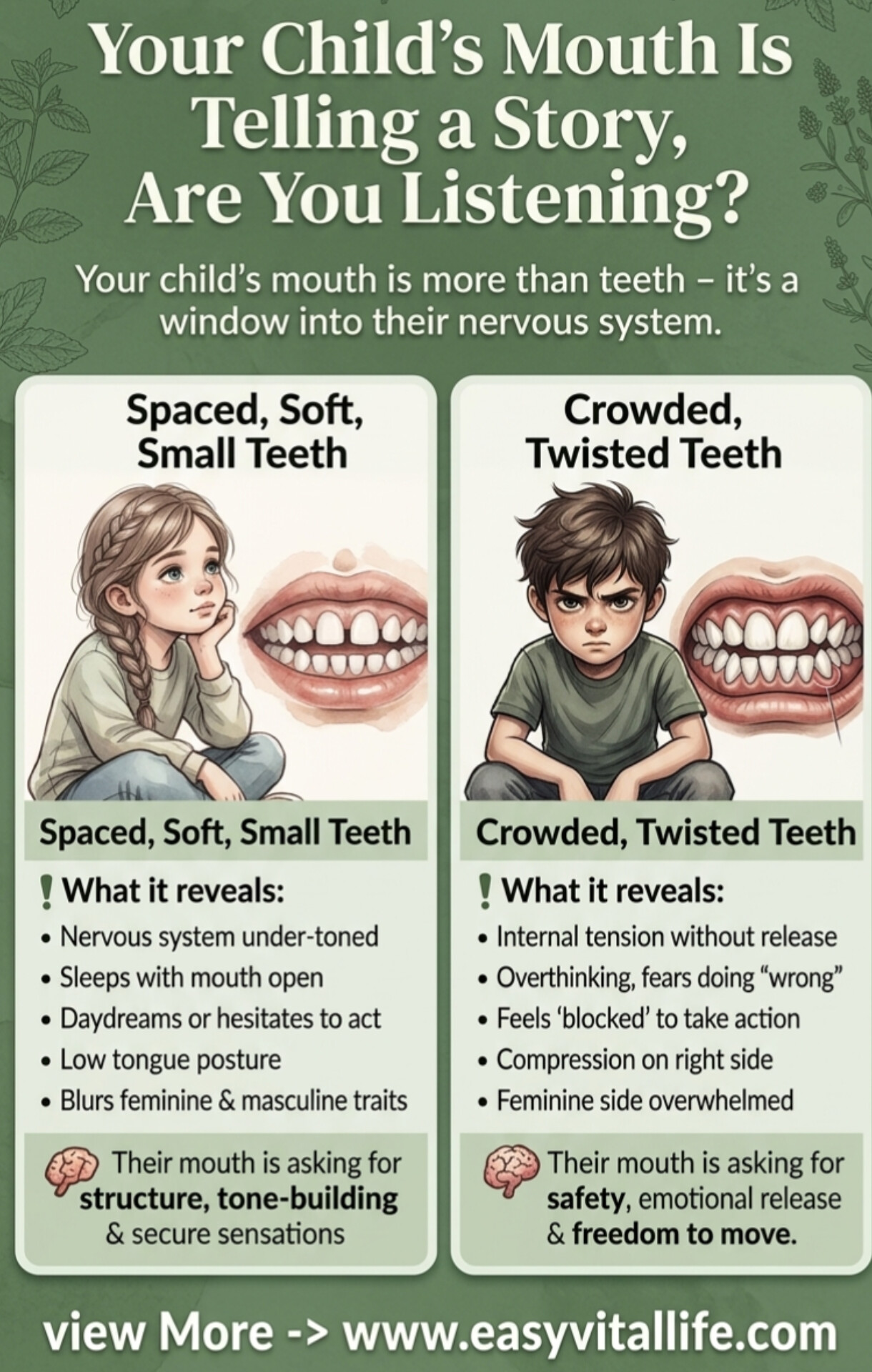
Spaced Soft Small Teeth in Children
Some children naturally develop small teeth with noticeable spaces between them. In many cases this is completely normal, especially during early childhood when baby teeth are still present.
However, excessive spacing combined with mouth breathing, low tongue posture, or weak oral muscles may indicate developmental habits that deserve attention.
Children with spaced teeth may also show signs such as sleeping with the mouth open, difficulty chewing certain foods, snoring during sleep, or reduced muscle tone around the mouth.
The tongue plays a major role in shaping the upper jaw. Ideally, the tongue should rest gently against the roof of the mouth. When the tongue rests too low, the upper jaw may not develop as fully as it should.
Encouraging healthy nasal breathing and proper oral posture may support better jaw development over time.
Crowded or Twisted Teeth in Children
Crowded teeth are extremely common in modern children and teenagers. This usually happens when the jaw does not have enough room for all the teeth to fit properly.
Several factors may contribute to crowded teeth including mouth breathing, prolonged pacifier use, thumb sucking, allergies, chronic congestion, poor tongue posture, and genetics.
Children with crowded teeth may sometimes experience difficulty cleaning between teeth, increased risk of cavities, speech challenges, jaw tension, or poor sleep quality.
Modern research suggests that jaw development is strongly connected to airway health. If a child struggles to breathe comfortably through the nose, they may unconsciously adapt by keeping the mouth open. Over time this can influence facial growth and dental alignment.
Parents who notice severe crowding, constant mouth breathing, or sleep issues should consider discussing these concerns with a qualified pediatric dentist or orthodontic professional.
The Connection Between Mouth Breathing and Dental Development
Mouth breathing is one of the most overlooked factors affecting children’s oral development. When children breathe through the mouth instead of the nose, the tongue often drops from the roof of the mouth. This may reduce proper support for the upper jaw.
Signs of mouth breathing in children may include dry lips, snoring, restless sleep, dark circles under the eyes, chronic fatigue, or difficulty concentrating during the day.
Nasal breathing helps filter and humidify air while supporting healthy oxygen flow. Encouraging healthy breathing habits may improve sleep quality, energy levels, and oral development.
If allergies or nasal congestion are preventing normal breathing, seeking medical advice may help identify the underlying cause.
Healthy Habits That Support Better Jaw and Teeth Development
Parents can encourage healthy oral development through simple daily habits. Offering nutrient rich foods that require chewing can help strengthen jaw muscles naturally. Limiting overly processed soft foods may also support proper muscle activity.
Encouraging children to breathe through the nose whenever possible is another important habit. Good sleep routines and regular dental checkups also play a major role in healthy growth.
Some families explore myofunctional therapy, which focuses on strengthening the muscles of the mouth and improving tongue posture and breathing patterns.
Early intervention often provides the best results because children’s jaws are still developing.
When to Seek Professional Advice
Not every child with crooked or spaced teeth has a serious issue. Dental development varies greatly from one child to another. However, certain signs may indicate the need for professional evaluation.
Parents should pay attention to symptoms such as chronic mouth breathing, loud snoring, restless sleep, speech delays, difficulty chewing, severe crowding, or jaw discomfort.
A pediatric dentist or orthodontic specialist can evaluate whether the child’s oral development is progressing normally and recommend appropriate guidance if needed.
Final Thoughts
A child’s teeth can offer valuable clues about breathing habits, jaw growth, and oral development. While social media posts often make dramatic claims about personality or emotions being directly linked to tooth shape, it is important to rely on evidence based information.
Spaced teeth, crowded teeth, and jaw alignment are influenced by many physical and developmental factors. Paying attention to breathing, sleep quality, tongue posture, and healthy habits may support better long term wellness.
The goal is not perfection. Healthy development begins with awareness, early support, and consistent care.
Learn more about natural wellness, healthy habits, and family health tips at www.easyvitallife.com