
12 Shocking Things About Aging No One Tells You And How To Fight Back Naturally
Aging happens to everyone, yet most people are unprepared for what really changes after 30. Society talks about wrinkles and gray hair, but the real aging process starts deep inside your body… Understanding these 12 shocking facts about aging helps you take control, stay strong, and feel younger longer. If you want to slow down aging, boost energy, and protect your health, this guide gives you the truth doctors rarely explain.
1. Muscle Loss Accelerates After 30
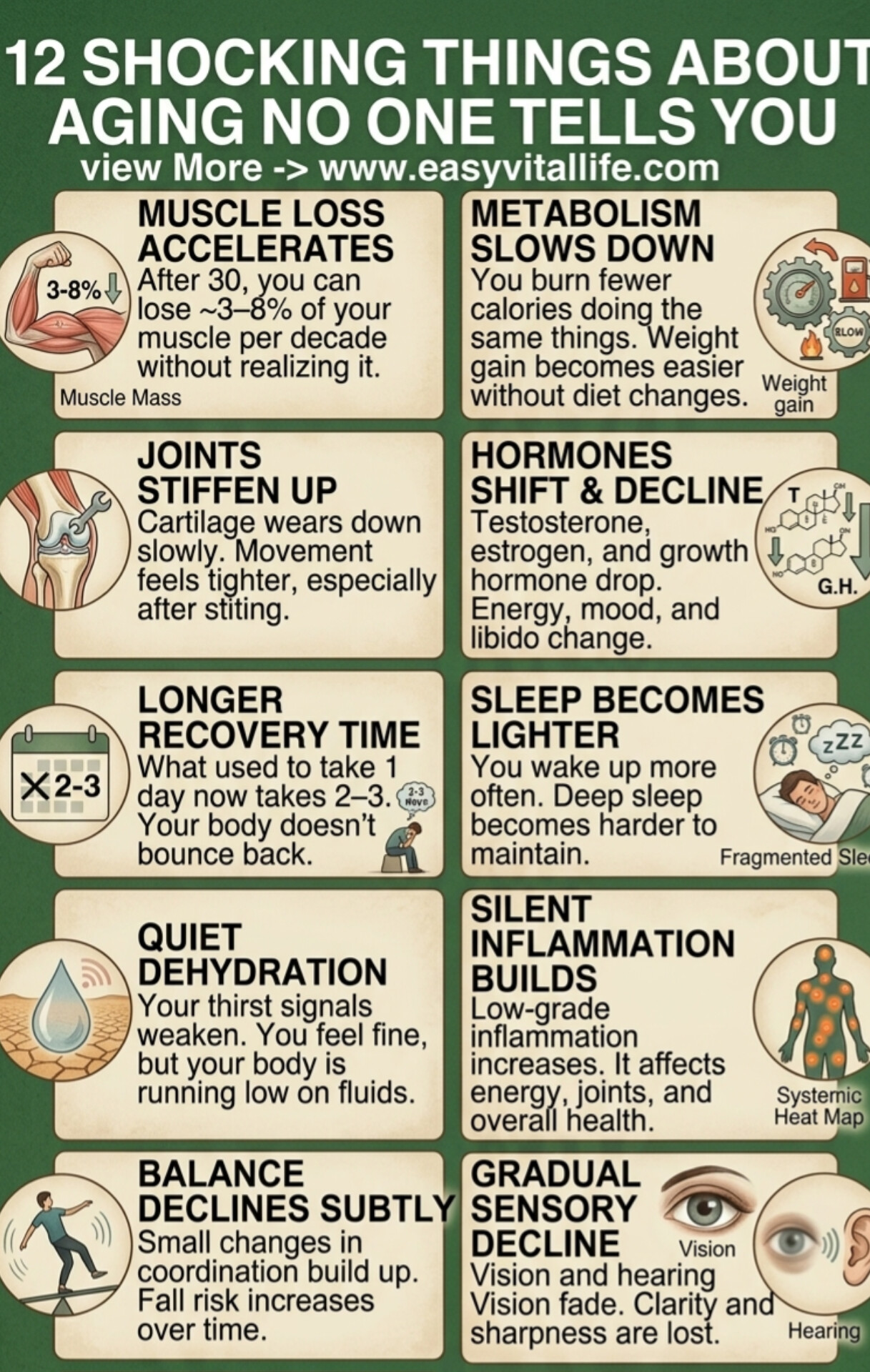
Starting in your thirties, you can lose 3 to 8 percent of your muscle mass every decade. This condition is called sarcopenia. Muscle loss affects strength, balance, and metabolism. Most adults do not notice it until everyday tasks feel harder. The solution is resistance training. Lifting weights, doing bodyweight exercises, and eating enough protein help preserve lean muscle. Aim for 0.7 to 1 gram of protein per pound of body weight daily to support muscle maintenance as you age.
2. Metabolism Slows Down Dramatically
Your metabolism controls how many calories you burn at rest. As you age, you burn fewer calories doing the same activities. This metabolic slowdown makes weight gain easier even without diet changes. Muscle loss is a major cause because muscle tissue burns more calories than fat. To boost metabolism naturally, build muscle, stay active throughout the day, prioritize sleep, and eat protein rich meals that increase the thermic effect of food.
3. Joints Stiffen Up And Cartilage Wears Down
Cartilage cushions your joints and prevents bone on bone friction. Over time, cartilage wears down slowly. Movement starts to feel tighter, especially after sitting for long periods. Stiff joints are not just an old age problem. They begin in your forties for many people. Low impact exercise like swimming, cycling, and yoga keeps joints lubricated. Collagen, omega 3 fatty acids, and turmeric can support joint health and reduce stiffness naturally.
4. Hormones Shift And Decline
Testosterone, estrogen, growth hormone, and thyroid hormones all drop with age. These hormone changes affect energy, mood, libido, muscle mass, and fat storage. Men experience andropause while women go through menopause. Both processes cause surprising shifts in body composition and mental clarity. Strength training, quality sleep, stress management, and a nutrient dense diet help balance hormones naturally. Avoid endocrine disruptors found in plastics and processed foods to protect hormone health.
5. Longer Recovery Time Becomes Normal
In your twenties, a hard workout might take one day to recover from. After 40, that same workout can take two to three days. Your body does not bounce back like it used to because cellular repair slows down and inflammation increases. Prioritize rest days, get 7 to 9 hours of sleep, and use active recovery like walking or stretching. Magnesium and tart cherry juice are proven to speed up muscle recovery after exercise.
6. Sleep Becomes Lighter And Fragmented
Deep sleep is when your body repairs muscle, consolidates memory, and releases growth hormone. As you age, deep sleep becomes harder to maintain. You wake up more often and feel less rested. Poor sleep accelerates aging across every system. Create a sleep routine, keep your room cool and dark, avoid screens before bed, and limit caffeine after 2 pm. Magnesium glycinate and glycine can improve sleep quality without medication.
7. Quiet Dehydration Sneaks Up On You
Your thirst signals weaken with age. You can feel fine while your body is running low on fluids. Chronic dehydration affects energy, skin elasticity, kidney function, and brain performance. Older adults are at higher risk for dehydration because the body holds less water. Drink half your body weight in ounces of water daily. Add electrolytes if you sweat, drink coffee, or live in a hot climate. Eat water rich foods like cucumber and watermelon.
8. Silent Inflammation Builds Over Time
Low grade chronic inflammation increases as you age. This systemic inflammation affects energy, joints, brain health, and heart health. It is called inflammaging and it drives most age related diseases. Processed foods, stress, poor sleep, and belly fat all raise inflammation levels. An anti inflammatory diet rich in berries, leafy greens, fatty fish, olive oil, and nuts fights back. Daily movement and stress reduction also lower silent inflammation markers.
9. Balance Declines Subtly Every Year
Small changes in coordination and proprioception build up over time. Your inner ear, vision, and muscle response all weaken gradually. This makes fall risk increase dramatically after 65. Balance is a skill you lose if you do not train it. Practice standing on one leg, walk heel to toe, and try tai chi or yoga. Strong legs and core muscles are your best defense against falls and fractures later in life.
10. Gradual Sensory Decline Affects Daily Life
Vision and hearing fade slowly. Clarity and sharpness are lost so gradually that many people adapt without noticing. Age related hearing loss makes conversations harder, while presbyopia makes reading small print difficult. Protect your eyes with lutein, zeaxanthin, and blue light filters. Guard your hearing by avoiding loud environments and using ear protection. Regular eye and hearing exams catch problems early before they impact quality of life.
11. Skin Changes Go Beyond Wrinkles
Collagen production drops 1 percent each year after 20. Skin becomes thinner, drier, and slower to heal. Sun damage accumulates and age spots appear. But skincare is not just cosmetic. Thin skin bruises easily and wounds take longer to close. Protect skin with daily SPF, vitamin C serum, retinoids, and hydration. Eat collagen supporting foods like bone broth, citrus, and bell peppers to maintain skin integrity from within.
12. Brain Processing Speed And Memory Shift
You might walk into a room and forget why. That is normal cognitive aging. Processing speed slows and recall takes longer. This is not dementia, it is your brain changing how it stores and retrieves information. Neuroplasticity means your brain can still grow. Learn new skills, read daily, socialize often, and do puzzles to keep your mind sharp. Omega 3s, exercise, and quality sleep are the best nootropics for long term brain health.
How To Slow Down Aging Starting Today
Aging is inevitable but how fast you age is largely in your control. Lifestyle choices account for up to 80 percent of how you age. Start with the fundamentals. Lift weights three times per week to fight muscle loss and support metabolism. Walk 8000 to 10000 steps daily to keep joints mobile and inflammation low. Eat 30 grams of protein per meal to preserve muscle and balance hormones. Sleep in a cold dark room to maximize deep sleep and recovery. Drink water before you feel thirsty to prevent quiet dehydration.
Supplements can help but food and habits come first. Creatine supports muscle and brain function. Vitamin D3 with K2 protects bones and immunity. Magnesium improves sleep, recovery, and stress resilience. Omega 3 fatty acids fight inflammation and support heart and brain health.
The most shocking thing about aging is how much power you have to change it. You cannot stop the clock but you can decide how you age. Small daily actions compound into decades of better health, energy, and independence. Start today and your future self will thank you.