
Why Your Metabolism Is So Slow: 7 Science Backed Reasons and How to Fix It Naturally
Feeling like your metabolism is slow? If you are eating less but still gaining weight, constantly tired, or struggling with stubborn belly fat, a sluggish metabolism may be the hidden cause. Your metabolism is the engine that converts food into energy….When it slows down, your body burns fewer calories at rest, stores more fat, and makes weight loss feel impossible. The truth is that most metabolism problems come from daily habits you can control. Here is exactly why your metabolism is so slow and how to speed it up fast.
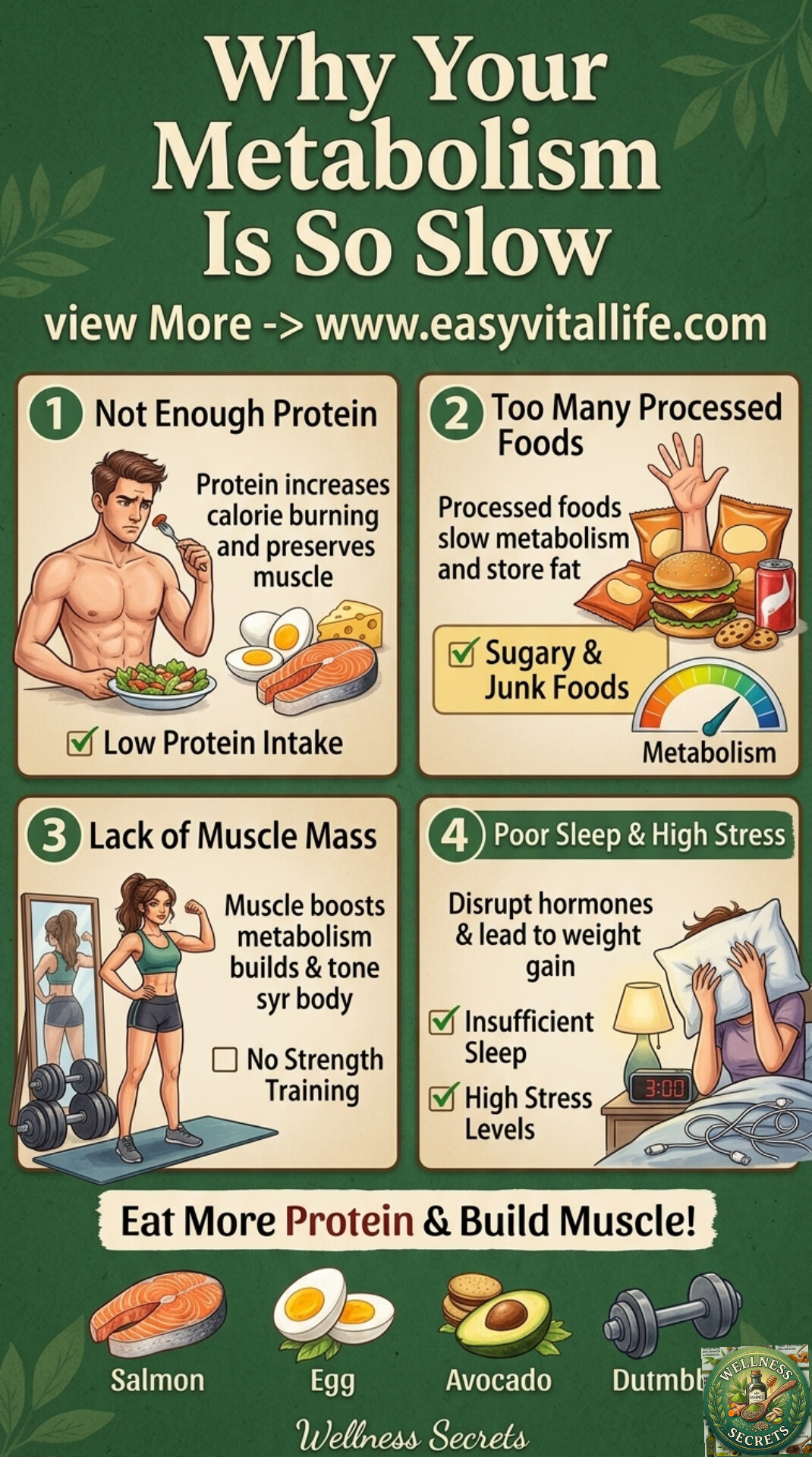
1. Not Eating Enough Protein Every Day
Protein has the highest thermic effect of food. That means your body burns 15 to 30 percent of protein calories just during digestion. Carbs only burn 5 to 10 percent and fats burn 0 to 3 percent. If your diet is low in protein, you miss this natural metabolism boost. Protein is also critical for maintaining lean muscle mass. Muscle burns three times more calories than fat tissue, even while you are sleeping. When you do not eat enough protein, your body breaks down muscle for fuel. Less muscle equals a slower resting metabolic rate. For women, aim for at least 100 grams per day. For men, target 140 grams or more. Add high quality protein sources like salmon, eggs, chicken breast, cottage cheese, lentils, and whey protein to every meal. This single change can increase metabolism and stop muscle loss during a calorie deficit.
2. Too Many Processed Foods and Added Sugars
Processed foods are metabolism killers. Chips, cookies, soda, white bread, and fast food are stripped of fiber and nutrients. Your body digests them quickly, which means you burn very few calories processing them. These foods also spike blood sugar and insulin. Chronically high insulin blocks fat burning and tells your body to store more belly fat. Many processed foods contain trans fats and vegetable oils that cause inflammation. Inflammation disrupts thyroid hormones that regulate metabolic speed. Replace sugary and junk foods with metabolism boosting whole foods. Choose fiber rich vegetables, berries, oats, quinoa, avocado, olive oil, and fatty fish like salmon. Whole foods keep you full longer, stabilize blood sugar, and force your body to work harder during digestion.
3. Lack of Muscle Mass From Skipping Strength Training
After age 30, adults lose 3 to 8 percent of muscle mass per decade if they do not strength train. This age related muscle loss is called sarcopenia and it is one of the top reasons for a slow metabolism. Each pound of muscle burns about 6 calories per day at rest, while a pound of fat burns only 2 calories. The math is simple. More muscle means a faster metabolism 24 hours a day. Cardio is great for heart health but it does not build significant muscle. You must lift weights or do resistance training three to five times per week. Focus on compound movements like squats, deadlifts, pushups, rows, and lunges. Building muscle is the most powerful way to increase your basal metabolic rate and fix a slow metabolism for good.
4. Chronic Poor Sleep and High Cortisol From Stress
Sleep is when your metabolism resets. Getting less than 7 hours per night lowers leptin, the hormone that signals fullness, and raises ghrelin, the hormone that triggers hunger. This hormonal imbalance makes you crave carbs and eat 300 extra calories the next day. Poor sleep also reduces insulin sensitivity by up to 40 percent in just four nights. That means your body stores more of what you eat as fat. Stress is just as damaging. Constant stress elevates cortisol. High cortisol breaks down muscle tissue and increases visceral fat storage around your organs. To boost metabolism, protect your sleep. Keep your bedroom cool and dark, avoid blue light before bed, and aim for 7 to 9 hours. Manage stress with daily walks, deep breathing, or meditation. Balanced hormones are essential for fat loss.
5. Dehydration Slows Calorie Burning
Water is essential for every metabolic process. Even mild dehydration of just 2 percent can lower your metabolic rate. Research shows drinking 17 ounces of water increases metabolism by 30 percent for up to 40 minutes. Cold water is even better because your body uses energy to heat it to body temperature. Many people mistake thirst for hunger and eat extra calories. Start your day with 16 ounces of water. Aim for half your body weight in ounces daily. Add electrolytes if you sweat a lot. Proper hydration helps your liver and kidneys process fat more efficiently.
6. You Are Not Eating Enough Calories
Severely restricting calories backfires. When you eat under 1200 calories for too long, your body enters survival mode. It slows your metabolism to conserve energy. This is called metabolic adaptation. Your thyroid hormone T3 drops, and you burn fewer calories during exercise. You feel cold, tired, and moody. Yo-yo dieting makes this worse over time. Instead of starving yourself, eat in a small deficit of 300 to 500 calories. Use refeed days with higher carbs once per week to signal safety to your body. Fuel your metabolism to fix it.
7. Underlying Thyroid Issues or Hormone Imbalance
Sometimes a slow metabolism is medical. An underactive thyroid, known as hypothyroidism, directly reduces metabolic rate. Symptoms include fatigue, weight gain, hair loss, and feeling cold. Low testosterone in men and low estrogen in women also decrease muscle and slow fat burning. If you have tried everything and still have a slow metabolism, get blood work done. Check TSH, Free T3, Free T4, testosterone, and cortisol. Addressing hormone health is critical for lasting results.
How to Speed Up Your Metabolism Starting Now
To increase metabolism naturally, combine all these strategies. Eat more protein at every meal. Lift weights to build muscle. Cut processed foods and eat whole foods like eggs, salmon, avocado, and leafy greens. Drink more water. Sleep 8 hours and lower stress. Avoid extreme dieting. A fast metabolism is built with consistency, not quick fixes. When you support your body with the right habits, you will burn more fat, have more energy, and make weight loss easier long term.