
Most people grab a handful of nuts straight from the bag without a second thought. It is convenient, it feels healthy, and it certainly beats reaching for a bag of chips. But what if that one extra step soaking your nuts and dried fruits overnight in water could significantly amplify their nutritional value…
improve how your body absorbs their minerals, and make them dramatically easier to digest? The ancient practice of soaking nuts is backed by real science, and once you understand why it works, you will never want to skip it again.
Why Soaking Nuts and Dried Fruits Makes a Difference
Raw nuts and dried fruits contain naturally occurring compounds called phytic acid and enzyme inhibitors. These compounds exist in seeds and nuts as a form of natural protection they prevent premature germination and help the nut survive in nature. The problem is that inside the human digestive system, these same compounds bind to minerals like zinc, iron, calcium, and magnesium, forming complexes that the body cannot absorb. This means that even when you eat nutrient-rich nuts, a significant portion of those minerals may be passing straight through you without being used.
Soaking nuts in water neutralizes phytic acid and deactivates enzyme inhibitors, effectively unlocking the full nutritional potential of the nut. The process also softens the outer skin and flesh, making the nuts far easier to chew and digest — particularly important for people with sensitive digestive systems, irritable bowel syndrome, or reduced stomach acid production. Think of soaking as partially pre-digesting your nuts so your body can do the rest with minimal effort.
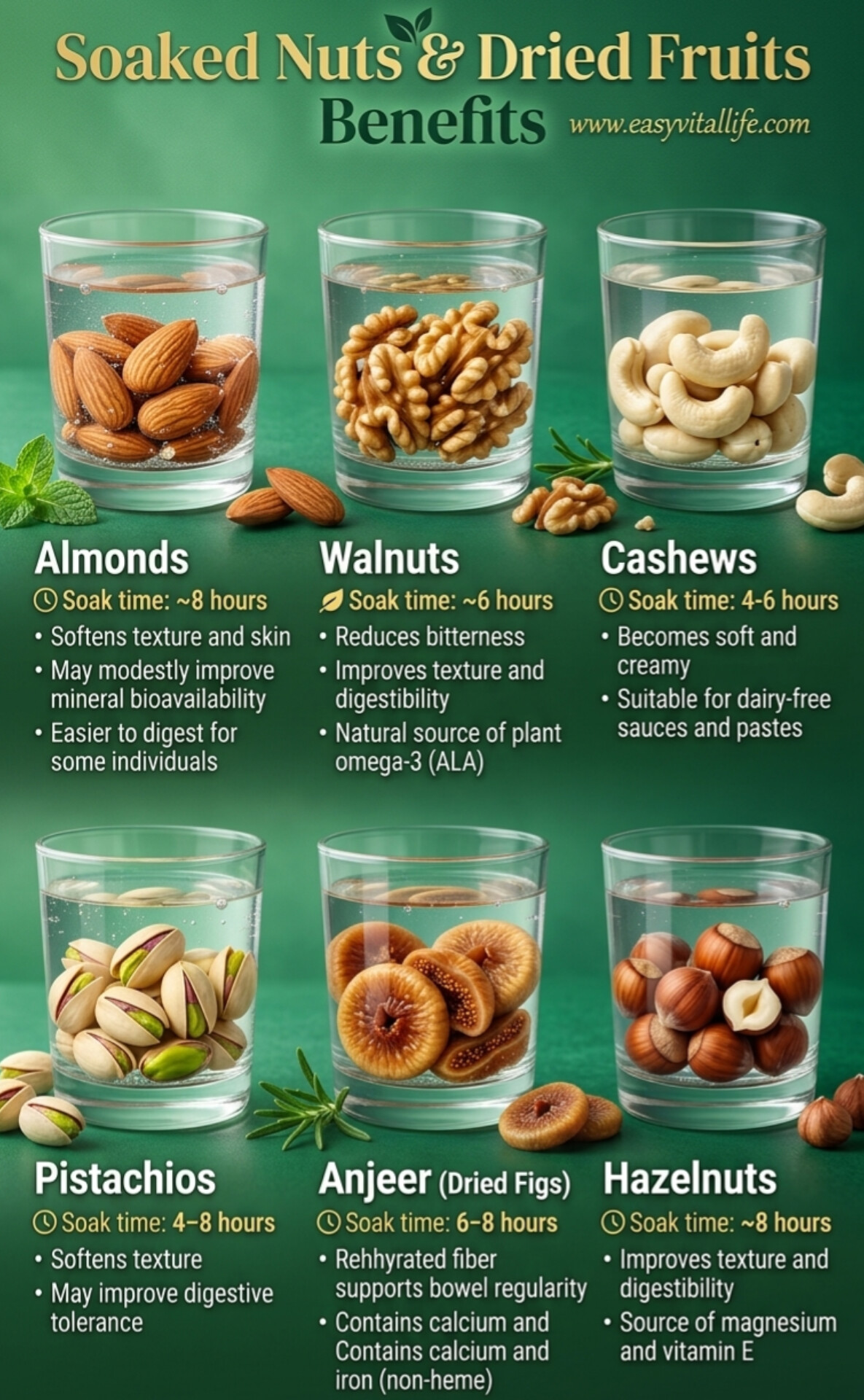
Almonds — Soak for 8 Hours
Almonds are perhaps the most well-known nut for soaking, and for good reason. After eight hours in water, the tough brown skin softens and loosens, making it easy to peel away. This skin contains the highest concentration of tannins and enzyme inhibitors in the almond, so removing it after soaking further improves digestibility.
Soaked almonds are noticeably softer in texture, have a milder, creamier flavor, and may offer modestly improved mineral bioavailability compared to their raw counterparts. They are also significantly easier to digest for individuals who find raw almonds heavy on the stomach.
Walnuts — Soak for 6 Hours
Walnuts are naturally bitter due to the tannins concentrated in their papery inner skin. Soaking for approximately six hours reduces this bitterness dramatically, resulting in a smoother, more pleasant flavor and a softer texture that works beautifully in both sweet and savory recipes. Beyond taste, soaked walnuts are easier on the digestive system and retain their impressive status as a natural plant-based source of alpha-linolenic acid (ALA), a type of omega-3 fatty acid that supports brain health, cardiovascular function, and the management of inflammation throughout the body.
Cashews — Soak for 4 to 6 Hours
Cashews undergo one of the most dramatic transformations through soaking. After just four to six hours in water, they become remarkably soft and develop a rich, creamy consistency that makes them the perfect base for dairy-free sauces, creams, dressings, and desserts. For anyone following a plant-based or lactose-free diet, soaked cashews are genuinely one of the most versatile whole-food ingredients available. Beyond their culinary uses, soaking improves their digestibility and makes their healthy fats and plant-based protein more accessible to the body.
Pistachios — Soak for 4 to 8 Hours
Pistachios are often overlooked when it comes to soaking, but the benefits are real. A soak of four to eight hours softens their texture considerably and may improve digestive tolerance, making them a better option for people who experience bloating or discomfort after eating them raw. Pistachios are naturally rich in antioxidants, B vitamins, and potassium, and soaking helps ensure that these nutrients are more bioavailable when consumed.
Anjeer (Dried Figs) — Soak for 6 to 8 Hours
Soaked anjeer, or dried figs, is one of the most celebrated traditional wellness remedies across many cultures — and modern nutrition science gives good reason for that reputation. When dried figs are soaked for six to eight hours, they rehydrate fully, and their fiber content becomes highly activated. This rehydrated fiber is exceptionally effective at supporting bowel regularity, relieving constipation, and nourishing the beneficial bacteria in the gut.
Anjeer is also a notable plant-based source of both calcium important for bone density and nerve function and non-heme iron, which supports healthy red blood cell production and helps prevent iron deficiency anemia.
Hazelnuts — Soak for 8 Hours
Hazelnuts soaked for around eight hours emerge with a noticeably improved texture and significantly better digestibility. The soaking process reduces the anti-nutrient load and allows the body to access hazelnuts’ rich supply of magnesium a mineral involved in over 300 enzymatic reactions in the body, including muscle function, energy production, and sleep regulation as well as vitamin E, a powerful fat-soluble antioxidant that protects cells from oxidative damage and supports healthy skin and immune function.
How to Start Soaking Nuts the Right Way
The process could not be simpler. Place your chosen nuts or dried fruits in a clean glass or ceramic bowl, cover generously with filtered water, add a small pinch of sea salt if desired (this further assists in neutralizing enzyme inhibitors), and leave them to soak at room temperature for the recommended time. Once soaked, drain and rinse thoroughly under fresh running water. Eat them immediately, or store them in the refrigerator in a sealed container for up to two to three days.
Soaking nuts takes about thirty seconds of active effort and delivers benefits that compound quietly over time better digestion, improved mineral absorption, and a noticeably more enjoyable eating experience.
The Bottom Line
The difference between a raw nut and a soaked nut is not just texture it is bioavailability, digestibility, and the degree to which your body can actually use what you are eating. Almonds, walnuts, cashews, pistachios, hazelnuts, and dried figs all respond beautifully to soaking, each offering specific benefits that make the small investment of time completely worthwhile.
Start tonight. Soak a handful of almonds or walnuts before bed. By morning, you will have a noticeably softer, more nutritious snack ready to eat and a simple new habit that your body will quietly thank you for every single day.
Eat smart. Live better: easyvitallife.com