
The Power of Nuts: Eat More Nuts for Brain, Heart, Skin & Longevity – 9 Healthiest Nuts Ranked
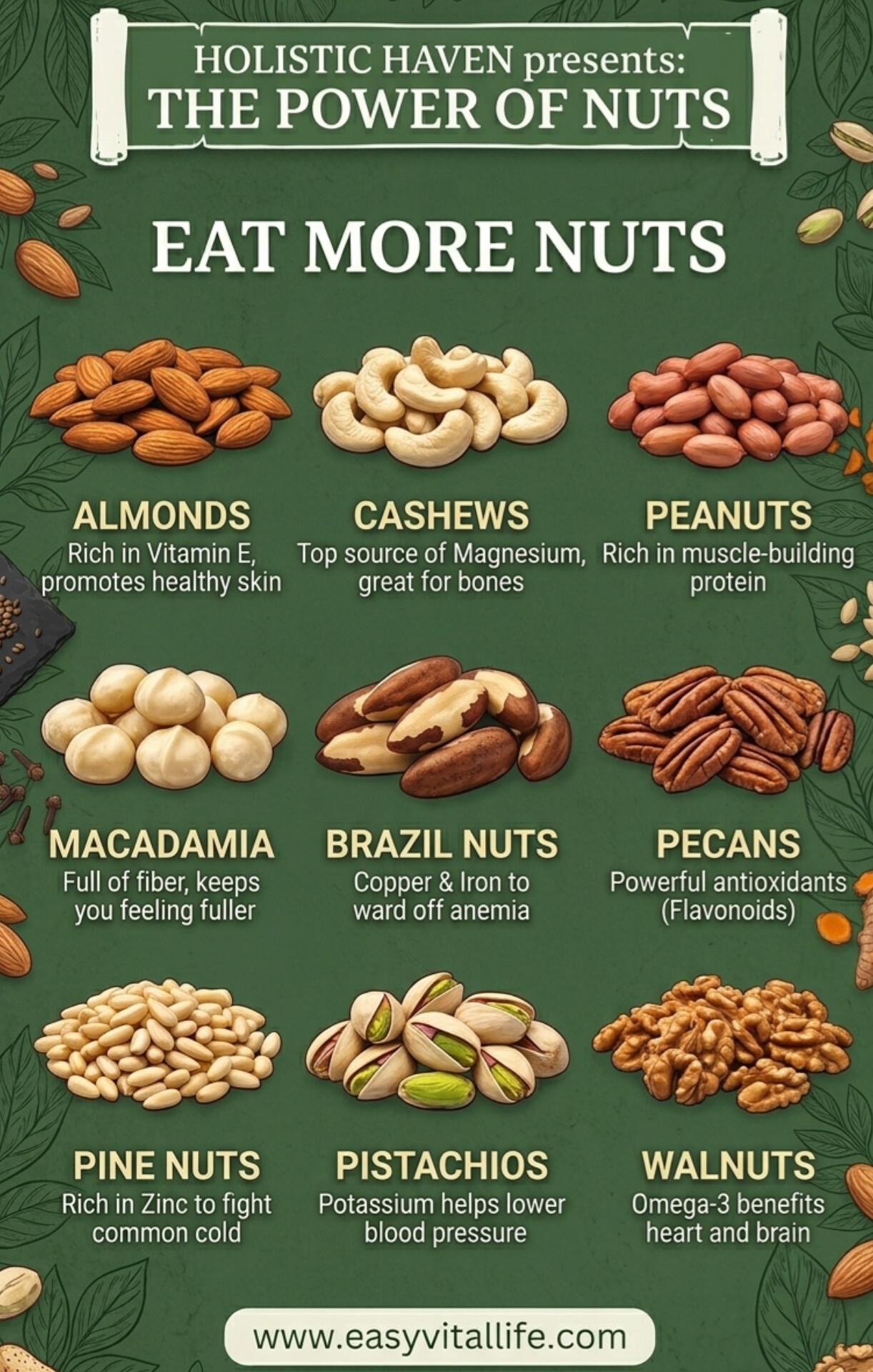
If you’ve seen the Holistic Haven infographic that says “EAT MORE NUTS,” it’s not just wellness hype. It’s one of the most validated nutrition recommendations in modern science….
In the PREDIMED trial, the Nurses’ Health Study, and the Adventist Health Study-2, people who ate 1 ounce of nuts 5 or more times per week had a 29% lower risk of heart attack, 23% lower risk of cognitive decline, and lived on average 2.4 years longer than non-nut eaters.
Nuts deliver what no supplement can: a perfect matrix of healthy fat, plant protein, fiber, magnesium, zinc, copper, selenium, Vitamin E, polyphenols, and arginine, all in a whole food that keeps you full for hours.
This long-form guide breaks down the 9 nuts in the image — almonds, cashews, peanuts, macadamia, Brazil nuts, pecans, pine nuts, pistachios, and walnuts — with exact nutrition, clinical benefits, who should eat them, how to prepare them for maximum absorption, and how to build a daily nut protocol for your specific goal.
Deep Dive – The 9 Power Nuts from the Infographic
1. ALMONDS – The Skin Vitamin E Shield
Image claim: Rich in Vitamin E, promotes healthy skin
Science upgrade: One ounce (23 almonds) = 7.3mg alpha-tocopherol Vitamin E (48% RDA), 6g protein, 3.5g fiber, 76mg magnesium, 1.1mg manganese. Vitamin E accumulates in sebum and protects skin lipids from UV-induced oxidation. In a 12-week UC Davis trial, women eating 2 oz almonds daily had 20% fewer wrinkles and 16% less skin pigmentation.
Beyond skin: Almond skins contain flavonoids that work synergistically with Vitamin E, increasing antioxidant capacity 10-fold. Almonds also lower LDL by 7-10 mg/dL.
Best preparation: Soak 8 hours, peel skins for sensitive digestion, or eat with skins for maximum polyphenols. Dry roast under 300F to preserve Vitamin E. Avoid blanched almonds for skin benefits — you lose the flavonoids.
Who needs them most: People with acne, eczema, sun exposure, smokers, anyone over 35 wanting to slow skin aging.
How to use: Skin Glow Trail Mix: 15 almonds + 2 Brazil nuts + 5 dried tart cherries. Eat at 3pm when cortisol drops.
2. CASHEWS – The Magnesium Bone Builder
Image claim: Top source of Magnesium, great for bones
Science upgrade: One ounce (18 cashews) = 82mg magnesium (20% RDA), 5g protein, 1.6mg copper (178% RDA), 0.9mg iron. Magnesium activates osteocalcin, the protein that binds calcium to bone. Without magnesium, calcium supplements don’t work.
Cashews are also highest in tryptophan among nuts, the precursor to serotonin and melatonin.
Beyond bones: Copper is required for lysyl oxidase, the enzyme that cross-links collagen in bone and skin. Low copper = weak connective tissue.
Best preparation: Cashews are never sold truly raw due to urushiol in shell. Choose “raw” or dry-roasted, not oil-roasted. Soak 2 hours for creamy sauces, which increases magnesium bioavailability by reducing phytic acid.
Who needs them most: People with anxiety, insomnia, muscle cramps, restless legs, osteopenia, vegans low in copper.
How to use: Calm Cashew Milk: blend 1/4 cup soaked cashews + warm water + cinnamon + pinch sea salt before bed.
3. PEANUTS – The Muscle-Building Legume Nut
Image claim: Rich in muscle-building protein
Science upgrade: One ounce (28 peanuts) = 7g protein, highest of all, plus 2.4g arginine. Arginine boosts nitric oxide, improving blood flow for pumps and recovery. Peanuts also contain 2mg niacin and biotin for energy metabolism.
Peanuts are rich in resveratrol and p-coumaric acid, which increase BDNF, your brain growth factor.
Caution: Peanuts are high in aflatoxin risk if not stored properly. Buy from reputable brands, store in fridge, choose Valencia peanuts which are lower mold.
Best preparation: Dry-roasted or boiled. Boiled peanuts, popular in the South, have 4x more resveratrol and are easier to digest.
Who needs them most: Athletes, teens, budget-conscious eaters, people needing affordable plant protein.
How to use: Post-workout: 2 tbsp natural peanut butter + banana + pinch sea salt.
4. MACADAMIA – The Satiety King for Keto and Fasting
Image claim: Full of fiber, keeps you feeling fuller
Science upgrade: One ounce (10-12 nuts) = 21g fat, 75% monounsaturated, only 2g net carbs, 2.3g fiber. The fat is mostly oleic acid and palmitoleic acid, an omega-7 that improves insulin sensitivity.
Macadamias trigger the most CCK release of any nut, keeping you full 4-5 hours.
Beyond satiety: Lowest omega-6 of all nuts, making them the most anti-inflammatory nut for keto diets.
Best preparation: Eat raw or low-temp roasted. High heat damages the delicate monounsaturated fat. Store in freezer.
Who needs them most: People on keto, intermittent fasting, those with insulin resistance, anyone who gets hungry 1 hour after eating.
How to use: Crush 5 macadamias over fish instead of breadcrumbs for a satiating crust.
5. BRAZIL NUTS – The Thyroid Selenium Solution
Image claim: Copper & Iron to ward off anemia
Science upgrade: The real story is selenium. One nut = 95-100mcg selenium (175% RDA). Selenium is the cofactor for glutathione peroxidase and for converting T4 to active T3 thyroid hormone. In a Brazilian trial, 2 Brazil nuts daily for 3 months lowered thyroid antibodies by 22% in Hashimoto’s patients.
They do contain 0.5mg copper and 0.7mg iron per ounce, supporting red blood cell formation, but selenium is the star.
Safety: Do not exceed 3 nuts per day. Selenium toxicity causes hair loss and brittle nails. Cycle 5 days on, 2 days off.
Best preparation: Eat raw, one per day, chewed thoroughly. Store in freezer to prevent rancidity of selenium-rich oils.
Who needs them most: Anyone with hypothyroidism, hair thinning, low immunity, men for sperm motility.
How to use: Chop one Brazil nut into morning oatmeal — you’ll never taste it.
6. PECANS – The Flavonoid Antioxidant Powerhouse
Image claim: Powerful antioxidants (Flavonoids)
Science upgrade: One ounce (19 halves) = 106% RDA manganese, plus more than 20 flavonoids, highest proanthocyanidin content of any nut. These flavonoids reduce LDL oxidation, the first step in plaque formation.
Pecans also contain gamma-tocopherol Vitamin E, which specifically protects against nitrogen-based free radicals from pollution and processed meat.
Best preparation: Toast at 275F for 8 minutes to release flavor without destroying polyphenols.
Who needs them most: People over 50, those with family history of heart disease, city dwellers exposed to pollution.
How to use: Brain pecan butter: blend pecans + walnuts + pinch salt. Spread on apple slices.
7. PINE NUTS – The Zinc Immune Booster
Image claim: Rich in Zinc to fight common cold
Science upgrade: One ounce (167 kernels) = 1.8mg zinc (16% RDA), 4g protein, plus pinolenic acid, a unique fatty acid that stimulates GLP-1 and CCK, reducing appetite by 30% in studies.
Zinc is required for T-cell maturation. Even mild deficiency doubles cold duration.
Best preparation: Lightly toast in dry pan 2 minutes. Do not overheat — pine nuts go rancid fastest. Buy European or Korean pine nuts, avoid cheap Chinese varieties linked to “pine mouth” bitter taste.
Who needs them most: People prone to colds, vegetarians low in zinc, those trying to reduce appetite naturally.
How to use: Classic pesto, or sprinkle on roasted vegetables for zinc boost.
8. PISTACHIOS – The Blood Pressure Potassium Nut
Image claim: Potassium helps lower blood pressure
Science upgrade: One ounce (49 nuts) = 291mg potassium, 6g protein, 3g fiber, plus lutein and zeaxanthin for eye health. In a 4-week Penn State study, 2 oz pistachios daily lowered systolic blood pressure by 4.8 points.
Pistachios are also the lowest calorie nut at 159 calories per ounce because you eat them in shell and chew longer.
Best preparation: Buy in-shell, raw or dry-roasted unsalted. The shelling process slows eating and increases mindfulness.
Who needs them most: People with hypertension, screen workers needing eye protection, weight watchers.
How to use: Blood pressure snack: 25 pistachios + 1 small orange at 4pm.
9. WALNUTS – The Omega-3 Brain and Heart Nut
Image claim: Omega-3 benefits heart and brain
Science upgrade: One ounce (14 halves) = 2.5g ALA omega-3, the plant form your brain converts to DHA. Walnuts also contain polyphenols that increase beneficial gut bacteria that produce butyrate, which crosses the blood-brain barrier and reduces neuroinflammation.
In the WAHA trial, adults eating walnuts daily for 2 years had significantly slower cognitive decline and lower LDL.
Best preparation: Never roast above 300F. Eat raw or soak overnight then dehydrate. Store in fridge or freezer — omega-3 oxidizes fast.
Who needs them most: Vegans, pregnant women, students, anyone with brain fog, depression, or high triglycerides.
How to use: Brain breakfast: overnight oats with chopped walnuts, blueberries, and ground flax.