
Unusual body pain meaning, what does body pain mean, holistic pain interpretation, tinnitus causes stress, jaw tension anxiety, costochondritis symptoms, non-cardiac chest pain, diaphragm spasm, desk neck pain, wrist pain from typing, plantar fasciitis morning pain, body awareness wellness….
Have you ever experienced a sharp pain in your side that wasn’t from a workout, or a persistent ringing in your ears that seemingly came from nowhere? Your body rarely communicates through whispers; when something is out of balance, it sends signals through physical sensations.
Understanding these “unusual” pain signals is the first step toward holistic healing and body awareness. Often, where you feel the pain isn’t necessarily where the problem starts. Here is how to interpret the hidden messages your body is sending you.
Disclaimer: This article on body pain interpretation is for educational and informational purposes only. It does not replace professional medical advice, diagnosis, or treatment. Persistent, severe, or worsening pain should always be evaluated by a qualified healthcare provider to rule out underlying medical conditions.
1. Head and Neck: Stress in Disguise & Postural Pain
Tinnitus stress link, TMJ anxiety symptoms, neck pain sleep posture, magnesium deficiency symptoms
Our modern lifestyle places immense strain on the upper body, often manifesting in ways we don’t immediately recognize as postural or stress-related pain.
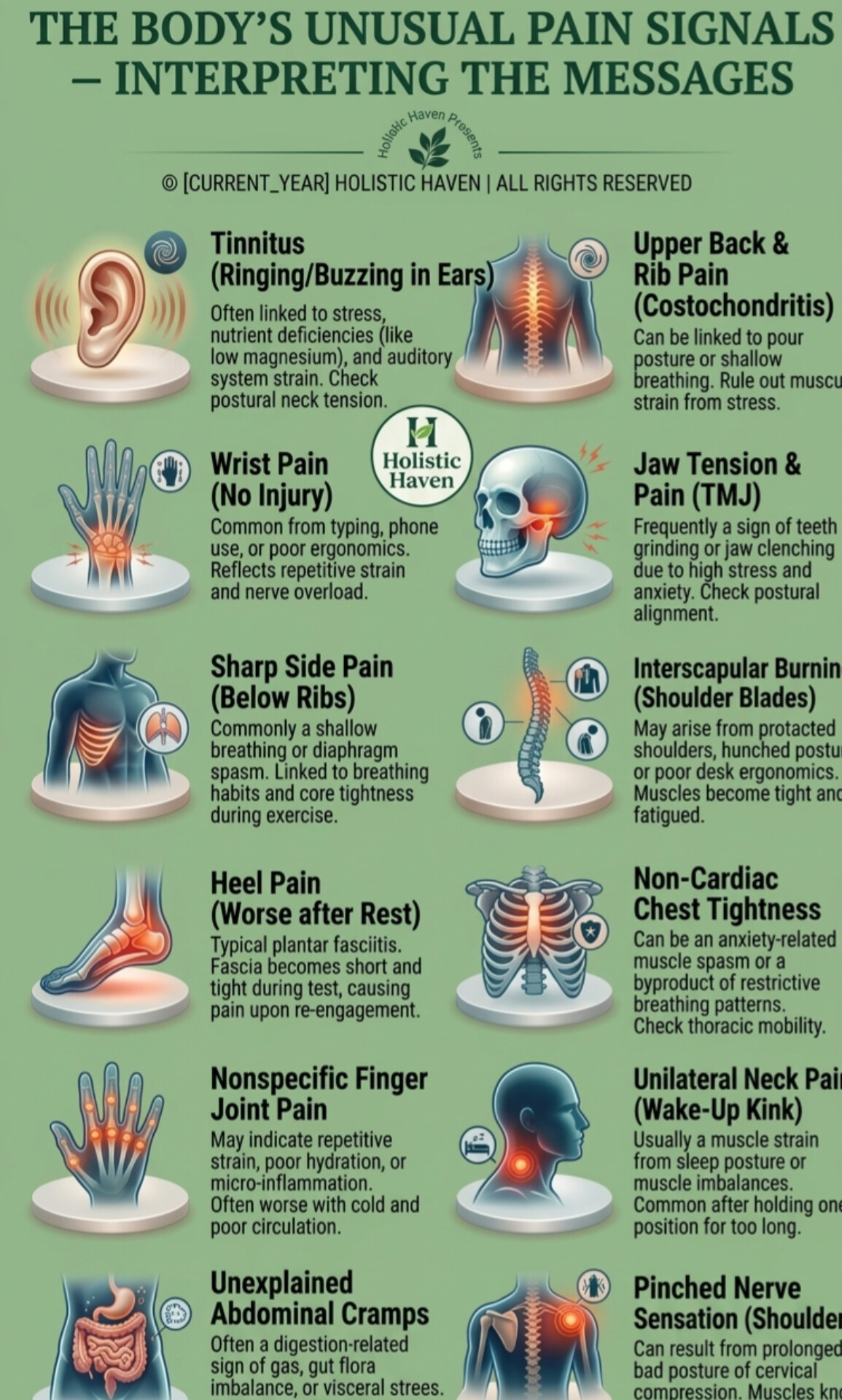
Tinnitus (Ringing/Buzzing in Ears): While it can be auditory, tinnitus causes are frequently linked to high stress levels, nervous system dysregulation, or nutrient deficiencies, specifically low magnesium. It can also be a byproduct of postural neck tension and tight cervical muscles compressing nerves.
What your body is saying: “Check your stress levels, mineral status, and neck posture.”
Jaw Tension & Pain (TMJ): Frequently a physical manifestation of anxiety and chronic stress. Teeth grinding (bruxism) or jaw clenching during sleep can signal that your nervous system is stuck in “fight or flight” mode. This is a classic jaw tension anxiety symptom.
What your body is saying: “Your nervous system needs to downregulate. Address your stress and sleep quality.”
Unilateral Neck Pain (Wake-Up Kink): Usually the result of poor sleep posture, an unsupportive pillow, or holding one position for too long. This neck pain reflects a muscle imbalance that needs gentle mobility work and ergonomic correction.
What your body is saying: “Your sleep setup and daily posture need an audit.”
2. The Torso: Breathing, Digestion, and Anxiety Signals
Target Keywords: costochondritis from posture, anxiety chest tightness, diaphragm spasm breathing, visceral stress gut, unexplained abdominal pain
Pain in the trunk of the body often points to how we breathe, how we manage stress, and how we fuel ourselves.
Upper Back & Rib Pain (Costochondritis): This sharp, alarming discomfort is often linked to shallow breathing or poor posture that inflames the cartilage connecting the ribs. Costochondritis symptoms worsen with deep breaths and are a common chest wall pain unrelated to the heart.
What your body is saying: “Your breathing mechanics and thoracic posture are restricted.”
Non-Cardiac Chest Tightness: When cardiac issues are ruled out by a doctor, this is often an anxiety-related muscle spasm or intercostal muscle tension. It suggests a need to check thoracic mobility and restrictive breathing patterns caused by stress.
What your body is saying: “Your nervous system and breath are dysregulated.”
Unexplained Abdominal Cramps: These are often visceral stress signals. They correlate with gut flora imbalances, dehydration, food sensitivities, or nervous system overdrive rather than a specific injury. This is key for mind-gut connection awareness.
What your body is saying: “Your gut-brain axis is inflamed. Check food, water, and stress.”
Sharp Side Pain (Below Ribs): Commonly a diaphragm spasm or side stitch. It’s a direct message from your body to fix your breathing habits, address core tightness, and improve hydration. Often triggered by shallow chest breathing during exercise.
What your body is saying: “Learn to breathe with your diaphragm, not your chest.”
3. Extremities: Repetitive Strain, Inflammation & Circulation
Desk neck shoulder pain, wrist pain typing, finger joint inflammation, plantar fasciitis heel pain, repetitive strain injury
Our hands and feet often bear the brunt of our daily digital habits and physical activity, creating repetitive strain injury signals.
Interscapular Burning (Shoulder Blades): A classic sign of “desk neck” or protracted shoulders. This burning sensation between the shoulder blades means the rhomboids and traps are fatigued from overstretching while hunched over a screen. A key posture pain signal.
What your body is saying: “Your workstation ergonomics are failing you.”
Wrist Pain (No Injury): Reflects nerve overload and tendon strain. In our digital age, wrist pain from typing and phone use is usually a sign of repetitive strain, poor ergonomics, and median nerve irritation — early signs of carpal tunnel syndrome.
What your body is saying: “Reduce screen time and fix your hand/wrist alignment.”
Nonspecific Finger Joint Pain: This can indicate micro-inflammation, poor circulation, or early arthritis. Interestingly, it is often worse during cold weather or when hydration levels are low, making it a subtle dehydration symptom.
What your body is saying: “Check your inflammation levels, hydration, and mineral intake.”
Heel Pain (Worse after Rest): The hallmark of plantar fasciitis. The plantar fascia becomes short and tight during rest or sleep, causing sharp heel pain in the morning upon your first few steps. It’s linked to tight calves, poor footwear, and weak foot muscles.
What your body is saying: “Your feet and calves need mobility and strength work.”
Pinched Nerve Sensation (Shoulder): Can result from prolonged bad posture or cervical compression. Muscles knot around a nerve pathway, creating radiating pain, tingling, or numbness. A common nerve pain signal from tech neck.
What your body is saying: “Your cervical spine is compressed. Move your neck and check your desk setup.”
Moving Beyond the Symptom: 3 Lifestyle Pivots for Holistic Pain Relief
how to fix posture pain, magnesium for muscle tension, diaphragmatic breathing benefits, holistic pain relief
To truly resolve these unusual pain signals, we must look at the body as an interconnected web. If you are experiencing these “unusual” pains, consider these three lifestyle pivots:
1. Ergonomic Audit: Check your desk height, monitor level, chair support, and phone usage habits. Small changes relieve interscapular pain, wrist strain, and neck tension fast. This is the fastest fix for posture-related pain.
2. Magnesium & Hydration: Many nerve and joint signals — including tinnitus, muscle cramps, finger joint pain, and anxiety — are exacerbated by simple dehydration or a lack of essential minerals like magnesium and potassium. Aim for half your body weight in ounces of water daily.
3. Breathwork & Mobility: Shifting from shallow chest breathing to deep diaphragmatic breathing can alleviate rib pain, chest tightness, and side stitches almost instantly. Pair with daily thoracic mobility and hip flexor stretches to release the diaphragm.
When to See a Professional About Body Pain
When to see doctor for pain, red flag pain symptoms, persistent pain causes
While interpreting these signals is helpful for daily wellness and body awareness, persistent or worsening pain should always be evaluated by a healthcare provider. Red flag symptoms include: pain with fever, unexplained weight loss, numbness/tingling that spreads, chest pain with shortness of breath, or pain after trauma. Holistic healing starts with ruling out serious conditions first.
For more insights into holistic living, natural wellness, and body awareness, visit www.easyvitallife.com.